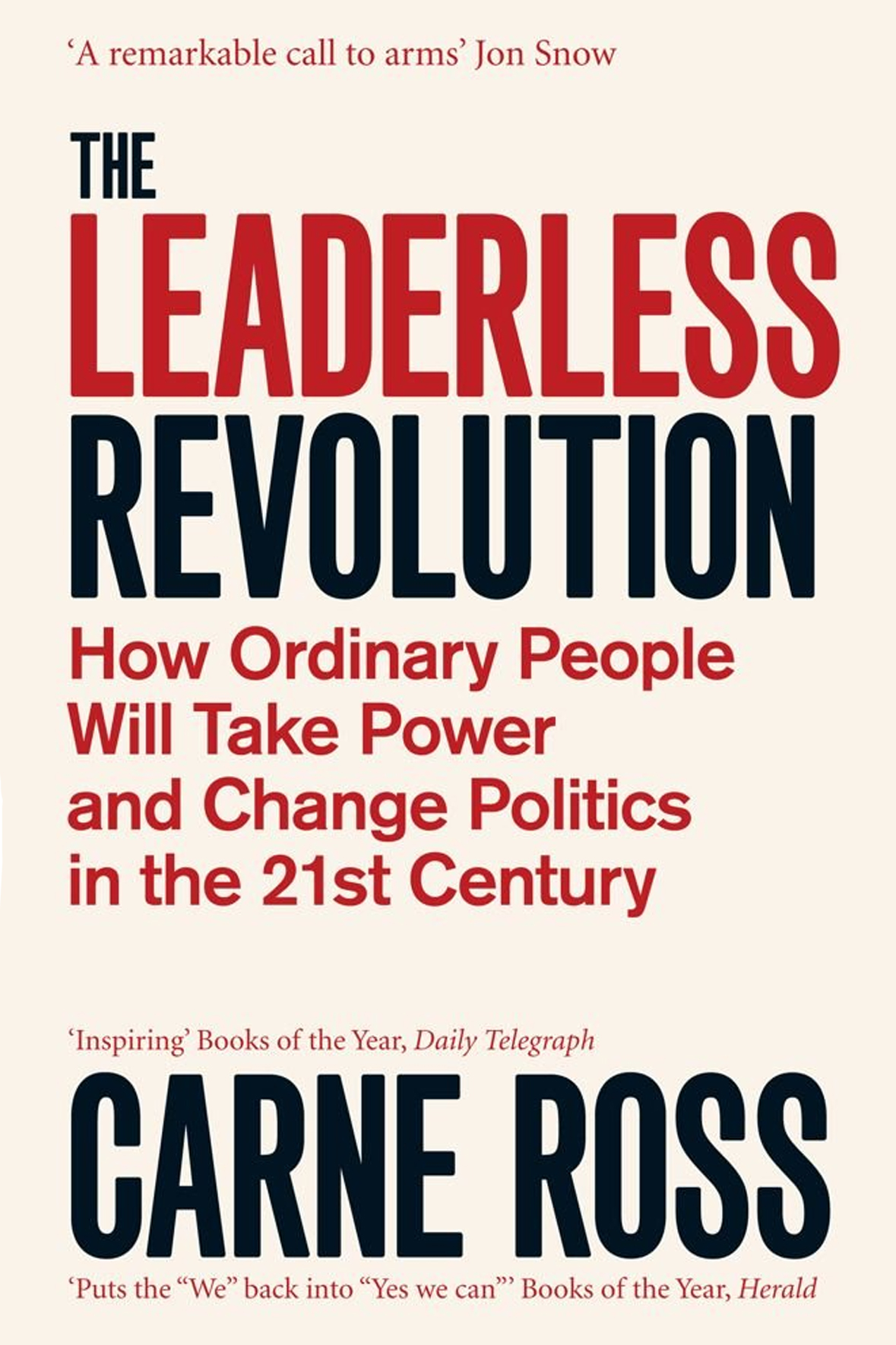
Carne Ross’ The
Leaderless Revolution is refreshing because of its atypical
perspective. Contemporary anarchist literature is often written by
academics who have studied political theory, or by working class
people, who have struggled in a Neo-liberal capitalist society, and
understand the need for change. Ross is neither of these; a former
British diplomat, he was a lead
official at Britain’s mission at the United Nations in New York
dealing with Iraq. He was responsible for
the policy on weapons of mass destruction and the pre-war sanctions.
Ross states that Britain and their allies knew that Saddam Hussein
did not possess significant WMD. Therefore, the sanctions and the
subsequent invasion of Iraq were unjustified, and led to hundreds of
thousands of unnecessary civilian deaths.
Rather than critiquing the establishment,
their systems and institutions from the outside, Ross has been
enmeshed in the inner workings of the machine, and has decided it is
broken.
This book is for those
new to anarchism as a political theory, but who are dissatisfied with
the state of the world, and yearn for something better. Many veteran
anarchists’ first reaction to Carne Ross might be one of distrust –
he was part of the establishment, he wears a suit, looks like a civil
servant, and is still involved in international diplomacy, albeit
advocating independently for marginalised groups. However, the fact
that he is a non-conventional anarchist, might be Ross’ greatest
strength. Brexit and Trump were arguably a result of people’s
dissatisfaction with current systems, and a desire for radical
change. Greta Thunberg and Extinction Rebellion have engaged a wide
range of people not normally involved in radical politics. This seems
a potentially fertile time for enlisting people to anarchism, and
many might be more easily recruited to the cause by a well-spoken,
respectable former diplomat, than a dreadlocked crusty with a black
bandana over their face. Ross’ experience and former position
afford him an air of respectability and legitimacy that may make his
messages more palatable for many people.
Ross eschews
established examples of anarchism in action, such as the Paris
Commune or Spanish Civil War, instead presenting more contemporary
examples, such as the autonomous region of Rojava in North-eastern
Syria, participatory democracy at the municipal level in Porto
Allege, Brazil, or even communities’ abilities to respond to their
own needs following emergency situations more effectively than the
authorities and institutions entrusted to do so, as witnessed in the
aftermath of Hurricane Katrina or the Grenfell Tower fire.
Where Ross’ vision of an egalitarian society differs from many anarchists is his commitment to non-violence, and his suggestion of a gradual transition to an anarchist society, rather than through revolution. The belief that large worker-owned co-operative institutions could be built within a capitalist state, and that they would be so appealing, and productive, that the existing capitalist alternatives would simply wither away, demonstrates a naivety on Ross’ part. This book is a gateway drug, which will hopefully lead people to seek out stronger substances in the future. ■
Stuart Barton is a teacher and trade unionist, based in the West Midlands. You can check out his other writing on his website, as well as his Facebook and Twitter pages.
RELATED ARTICLES:-
The phrase “culture clash” has been around for a long time, but the September 11, 2001, attacks on the World Trade Centre and the Pentagon made the idea even more prominent. On the same day, George W. Bush Jr. said, “Today, our fellow citizens, our way of life, our freedom itself came under attack in […]
This Sunday at BASE social Centre, Bristol Anarchist Bookfair are hosting a showing of “Anti-Authoritarians at War”. The documentary – by Manon Boltansky and Nico Dix – tells the story of anti-authoritarian resistance to Russia’s full-scale invasion of Ukraine, highlighting the experiences, motivations, and struggles of anarchists and anti-fascists who chose to resist aggression with […]
As part of an ongoing series of short Question and Answer sessions with fellow Anarchists, today we’re talking with Circle-A studies, who are busy working on a game about squatting called “Creatures Like Us!”. Thank you for taking the time out to answer some questions, to kick us off, please introduce yourselves.Hi! We are Circle-A […]
After the Fascists arrived in Eastney what followed was a series of tense stand-offs with the police, and sporadic outbreaks of violence from those in uniform and out of it.
A special September… Today, September 2, marks the anniversary of one of the most significant actions carried out by Revolutionary Struggle, and by the domestic urban guerrilla movement in general: the car-bomb attack using 150 kilos of ANFO explosives against the Athens Stock Exchange, back in 2009. That was when Revolutionary Struggle was already talking […]