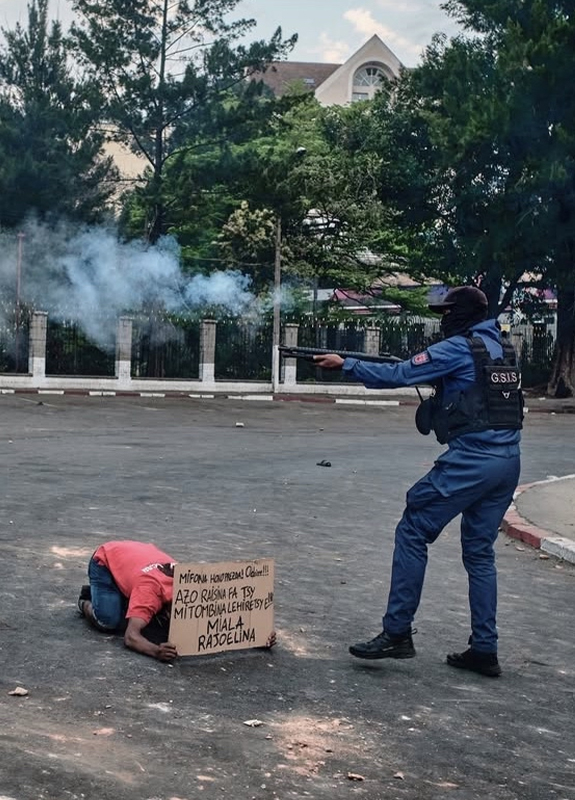
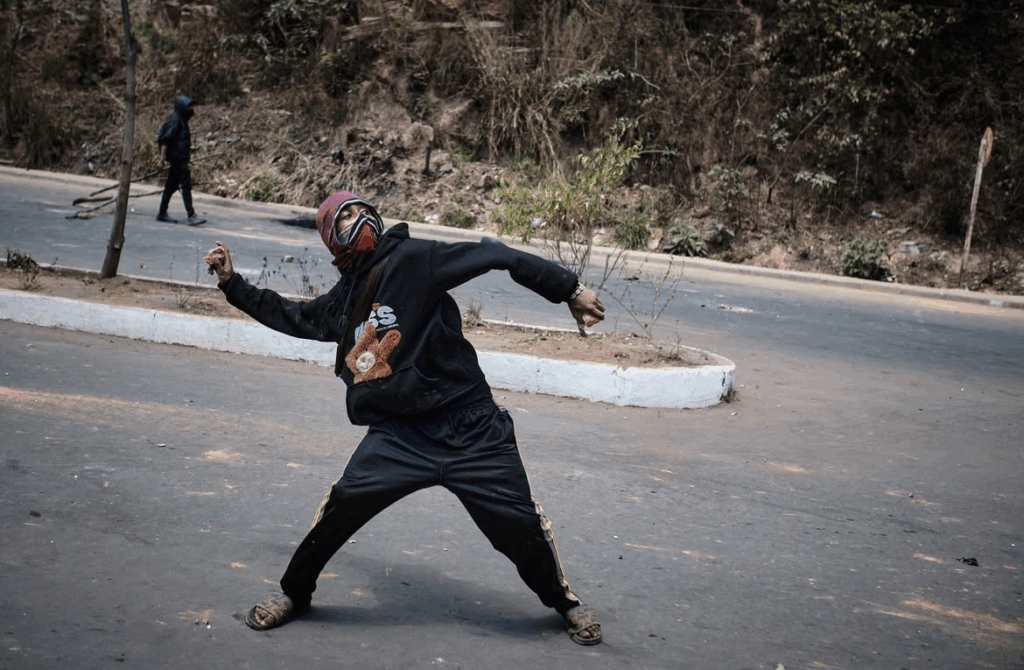
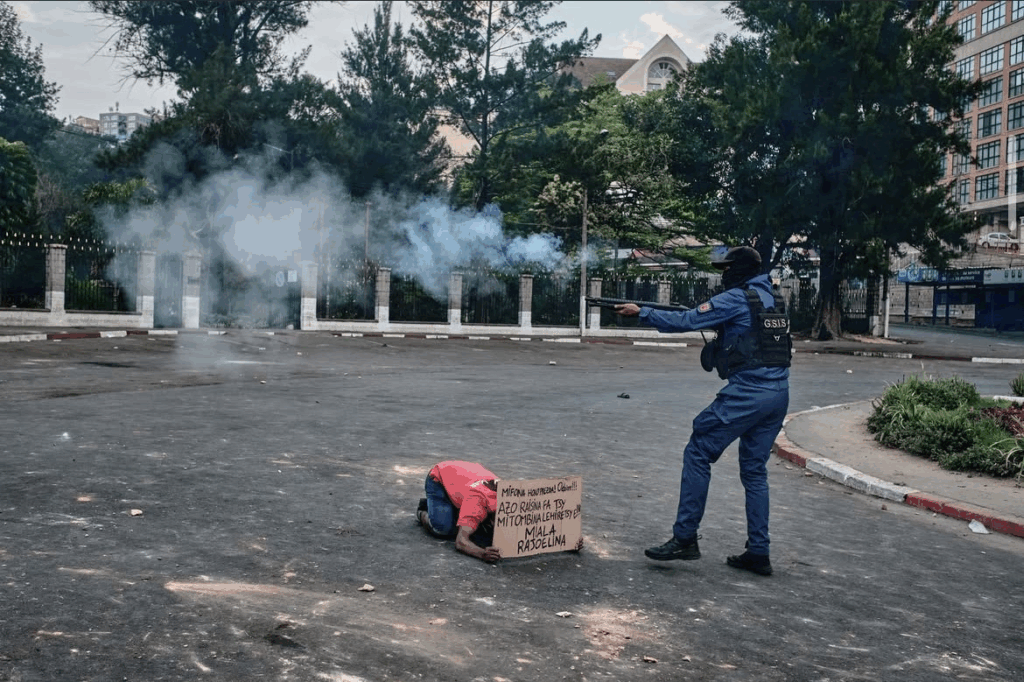
On September 25th, 2025, Madagascar joined the growing multitude of countries currently undergoing widespread protests fueled by an accused uneven distribution of resources and encroaching government authoritarianism, leading to the deaths of at least 22 protestors at the hands of President Andry Rajoelina’s security forces and leaving as many as 100 non-lethally injured according to figures reported by the United Nations. Initially organised via social media platforms such as Facebook and Tiktok, the newly-formed Gen Z Mada cites recent youth-led movements in Nepal and Morocco as inspiration for their rebellion, which began in the capital city of Antananarivo and has since spread throughout the country. Madagascar’s rising unrest further exemplifies Gen Z’s unique approach in the context of the digital age to class struggle, revolution, and the lasting impacts of imperialism on national political stability.
The class divide that fueled the crisis
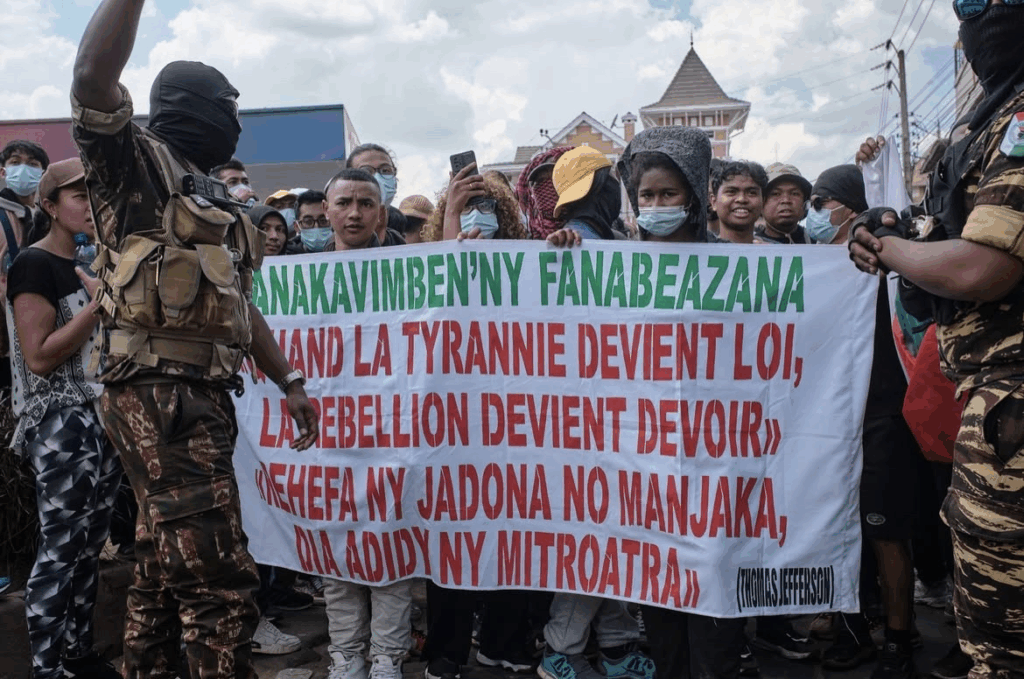
Despite its material wealth in natural resources, Madagascar ranks today as one of the top ten poorest countries in the world, with 75% of its citizens living below the poverty line. According to the International Monetary Fund, only one in every three people has access to electricity, which is subject to frequent shortages causing blackouts that last up to eight hours per day. Furthermore, water shortages, poor wages, lack of access to medical care, and the arrest of local Antananarivo politicians organising peaceful demonstrations in protest of these shortages on September 19th sparked widespread action leading up to the official beginning of the Malagasy protests on September 25th. Although President Rajoelina sacked his cabinet and replaced Christian Ntsay as prime minister in an attempt to quell the conflict, protestors ordered Rajoelina himself to apologise and resign from his position, citing his power and water cuts, increasing surveillance on political opponents and journalists, and his approval of security forces administering tear gas, water cannons, and AK-47s against demonstrators. Citizens also noted Rajoelina’s children attending expensive international universities and affinity for designer clothing brands as particularly offensive when the vast majority of Madagascar struggle to afford food and shelter, and would never have the same socioeconomic opportunities the president reportedly withholds essential living conditions from his own people to grant him and his family.
Gen Z and the rise of internet activism in the digital age
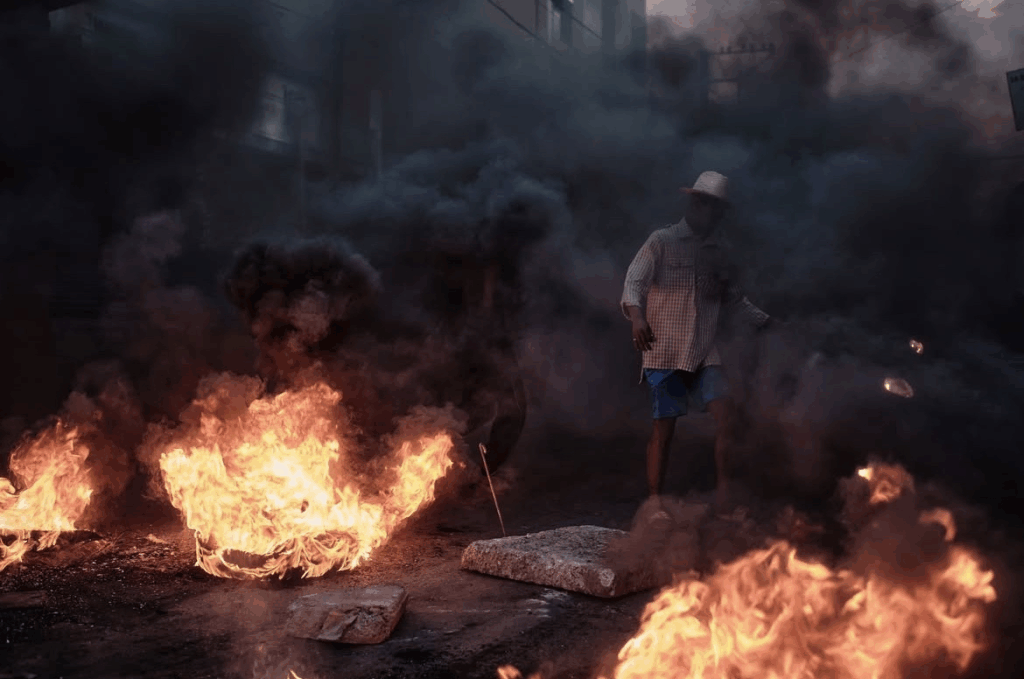
Particularly significant to the social context of Madagascar’s uprising is its youth-led nature. With similar recent protests and revolutions throughout the globe, the world has seen Gen Z as a demographic become radicalised not only through poor living conditions and a general lack of the promise of a better future, but also through the spread of knowledge, media, and theory through the internet, an unprecedented force in leftist organising in comparison to previous generations. This relatively new technology offers a way for largely tech-savvy youth to fight government corruption using some of capitalism’s most advanced tools, accelerating the rate of change and revolutionising the Gen Z approach to class struggle and global politics in real time. Using platforms like Tiktok, the Gen Z Mada underwent rapid formation and recruitment, meeting with civil society groups and local politicians both online and in person using the digital sphere for effective and instantaneous communicative and organisational purposes. Likewise, consistent access to news and media on the international level allows for a global network of class frustration, ideological change and action, and revolutionary fervour spread through the direct action of youth in countries with similar material conditions that inspired the Gen Z Mada, such as Nepal, Peru, and Morocco (particularly with their parallel decentralised digital collective, known as Gen Z 212). In essence, the utilisation of technology as a tool for liberation as seen in global Gen Z’s mobilisation tactics equalises the playing field of revolutionary change, allowing more equal access to information, quicker networking, international influence, a platform for all, and ease in establishing bottom-up, horizontal decision-making processes in direct contrast to implicitly hierarchical or totalitarian measures. Because of this, when government surveillance or crackdowns on social media and access to electricity become threatened, Gen Z exhibits strong resistance and rapid development of class consciousness, such as what became the revolution in Nepal, and of course, the ongoing conflict in Madagascar.
French rule and the lasting impacts of colonialism on political stability
Another criticism many protestors have made towards President Rajoelina stems from his involvement with the French government and industry in Madagascar, especially due to his previous relatively secretive acquisition of French citizenship and France’s alleged role in transporting him out of the country when he fled the rioting on October 13th. Madagascar, despite having gained independence in 1960, has continuously held close ties to France when it comes to national industry, trade, and political relations, suggesting the maintenance of French influence on the island, which has faced historical exploitation by European powers due to its affluence of natural resources. When those resources still fail to be properly distributed to the people, it inevitably begs the question of why that is so, and who in power may play a role in preventing their rightful allocation in a supposedly post-colonial era. These were some of the allegations hurled at former president Marc Ravalomanana, replaced by Rajoelina in 2009 following mass protests and a government coup at the hands of CAPSAT, ironically the same military unit that abandoned their barracks on October 11th and succeeded in seizing power in Rajoelina’s newfound absence. Rajoelina criticised Ravalomanana for many of the same actions now accused against him, including corruption, lethal force against protestors, and prioritising French interests over the needs of Madagascar. While Rajoelina’s development from an anti-authoritarian speaking out for the people to a figure much like the one he initially opposed may appear ironic, it is simultaneously a clear case of the common critique associated with anarchist philosophy regarding the inherently contaminating nature of the rigid hierarchy present within nation-states. Also notable is how it exemplifies the persisting psychological and political colonial influence within territories that have historically fallen victim to imperialism, a topic explored much more thoroughly by Algerian psychoanalyst and political philosopher Frantz Fanon in many of his published academic texts, such as Wretched of the Earth and Black Skin, White Masks.
Socialism and “anarchic elements” in Madagascar’s history
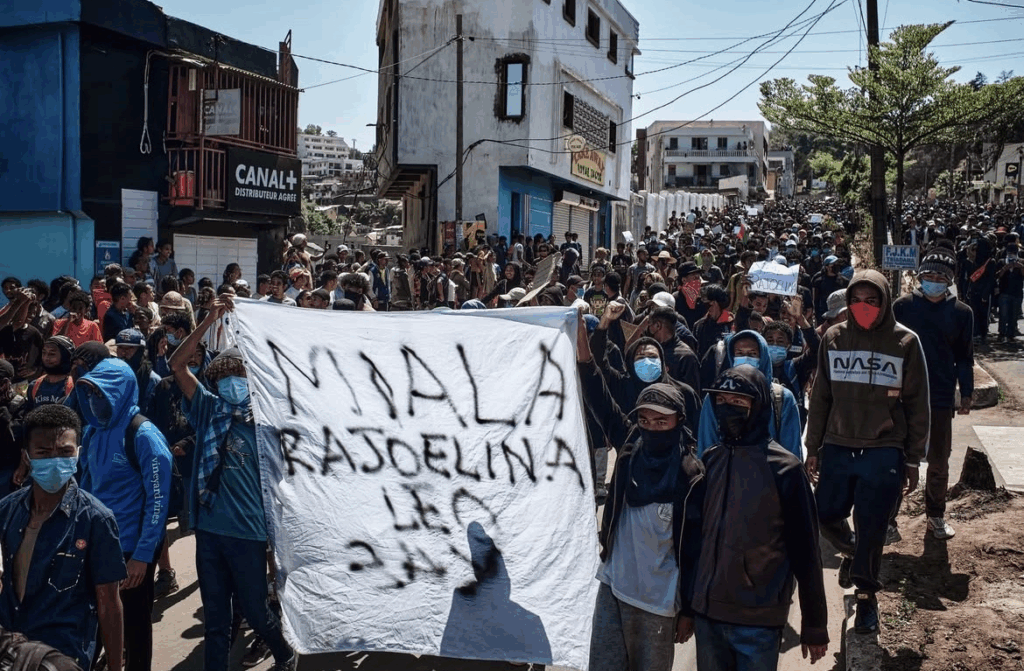
Although the movement as a whole has not declared any specific ideology, Gen Z Mada has received public backing from civil society groups, local politicians, and trade unions (most notably the Malagasy Trade Union Solidarity) encompassing a wide spectrum of anti-corruption political thought united in their demands for President Rajoelina’s resignation. Furthermore, such revolutionary action is not unheard of throughout Madagascar’s history – from 1976 to 1992, the Democratic Republic of Madagascar adhered to a one-party Marxist-Leninist system under the Malagasy Revolutionary Party before the state’s dissolution caused the party to transition to a more moderate, reformist position. Prior to the state’s reformation, anthropologist David Graeber claimed through personal observation that fragments of the country (particularly Arivonimamo) fell into an arguably anarchic system of governance for a period of about seven to eight years wherein local decisions derived from consensus, border administration ceased, private property was abolished, police presence largely vanished, and former government buildings became communal meeting spaces, before the new millennia saw the state’s reemergence under a French-inspired capitalist market economy. While there are no explicit references to any kind of socialism in Gen Z Mada’s official manifesto, it directly blames unregulated capitalism for much of the country’s systemic corruption, social inequalities, and inability to provide for the working people.
Key takeaway
The recent political situation in Madagascar provides a stark example of the Gen Z approach to youth-led digital organising in response to class division and oppression, joining the likes of Nepal, Morocco, Peru, Sri Lanka, and Bangladesh. While it is currently unclear what will become of Andry Rajoelina’s overthrow and CAPSAT’s seizure of government power, as leftists it is vital to remain informed on the development of current events across the globe, and most importantly to support the self-determination of all peoples in their respective struggle for liberation against the forces of oppression.
Here are the links for the website and social medias for the Gen Z Mada, which I think is the most relevant point of contact for the movement:
https://www.gen-z-madagascar.com/
https://www.instagram.com/gen_z_madagascar/?hl=en-gb
https://www.facebook.com/genz261?_rdc=1&_rdr#
Donno Gibson
Donno is an anarcho-communist writer, organiser, and musician based in the United Kingdom
Images from the movement taken by Madagascar based photographer iAko Randrianarivelo and used with his permission. Check out his Instagram, https://www.instagram.com/iako_photographer.
Citations
Rakotomalala, Omega, and Wycliffe Muia. “Madagascar Protests: Why Gen Z Protesters Want President Andry Rajoelina to Resign.” BBC News, BBC, 3 Oct. 2025, www.bbc.co.uk/news/articles/cz082y8j3jzo
Awami, Sammy, and Farouk Chothia. “Madagascar Presidency Says Attempt to Seize Power Under Way.” BBC News, BBC, 13 Oct. 2025, www.bbc.co.uk/news/articles/cd070pn4g07o
Ali, Faisal. “New Prime Minister in Madagascar after Protests Continue for Third Week.” Al Jazeera, Al Jazeera, 7 Oct. 2025, www.aljazeera.com/news/2025/10/6/madagascar-anti-government-protesters-take-to-the-streets-for-third-week
Akrawi, Rezgar. “The Most Prominent Intellectual and Organizational Foundations of the Electronic Left (E-Left).” Libcom.Org, libcom.org/article/most-prominent-intellectual-and-organizational-foundations-electronic-left-e-left
Akrawi, Rezgar. “Gen Z 212 and Youth Protests in Morocco: From the Digital Sphere to the Street.” Libcom.Org, libcom.org/article/gen-z-212-and-youth-protests-morocco-digital-sphere-street
Rfi. “France Evacuates Madagascar President amid Protests and Army Revolt.” RFI, RFI, 13 Oct. 2025, www.rfi.fr/en/africa/20251013-france-evacuates-madagascar-president-amid-protests-and-army-revolt
“Madagascar’s Gen Z Drives Protests, but Offers Few Answers on What’s next” | Reuters, www.reuters.com/world/europe/scenting-victory-madagascar-youth-give-scant-thought-whats-next-2025-10-14/
Awami, Sammy, and Danai Nesta Kupemba. “Military Says It Has Seized Power in Madagascar after President Moves to ‘Safe Place.’” BBC News, BBC, 14 Oct. 2025, www.bbc.co.uk/news/articles/cn8xjjdgl8vo
Graeber, David. Fragments of an Anarchist Anthropology. Prickly Paradigm Press : Distributed by University of Chicago Press, 2004.
Fanon, Frantz. Black Skin, White Masks. Editions Du Seuil, 1952.
Fanon, Frantz. Wretched of the Earth. François Maspero, 1961.