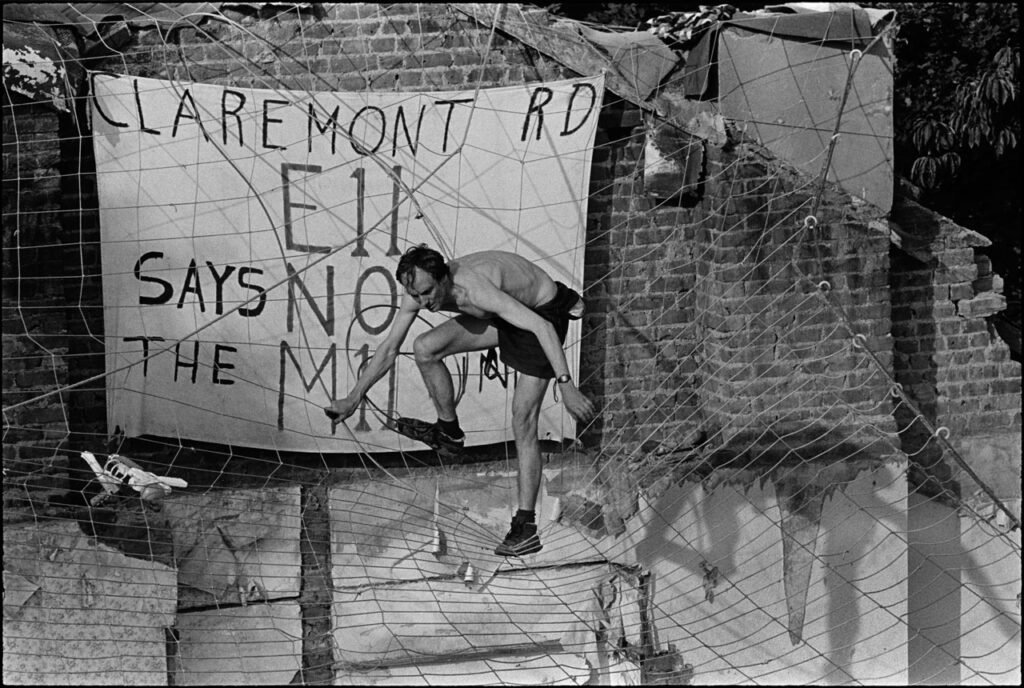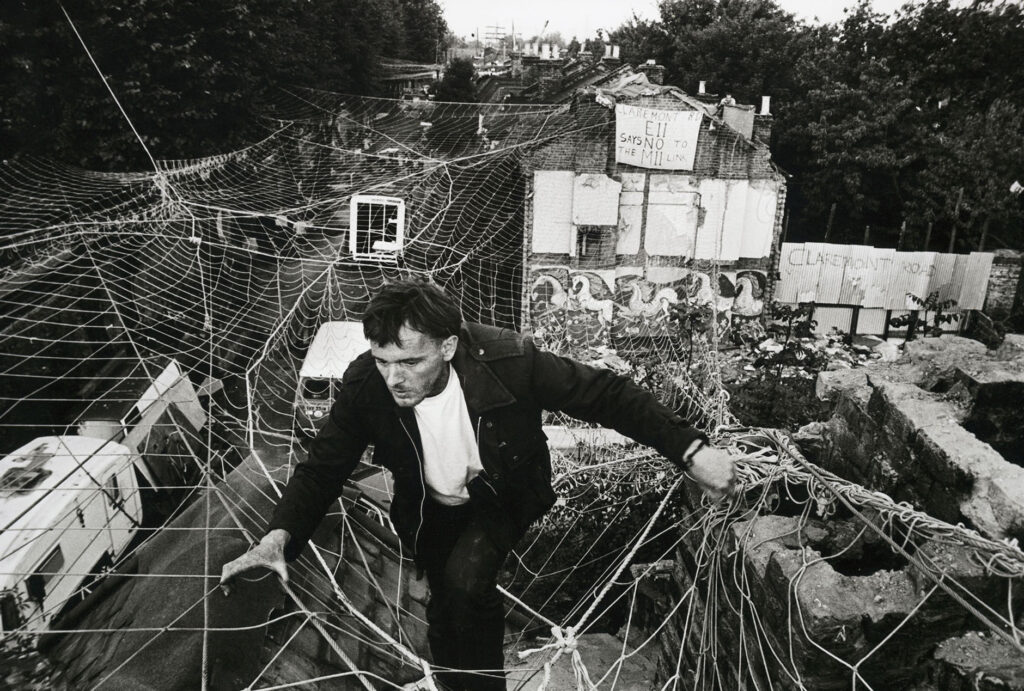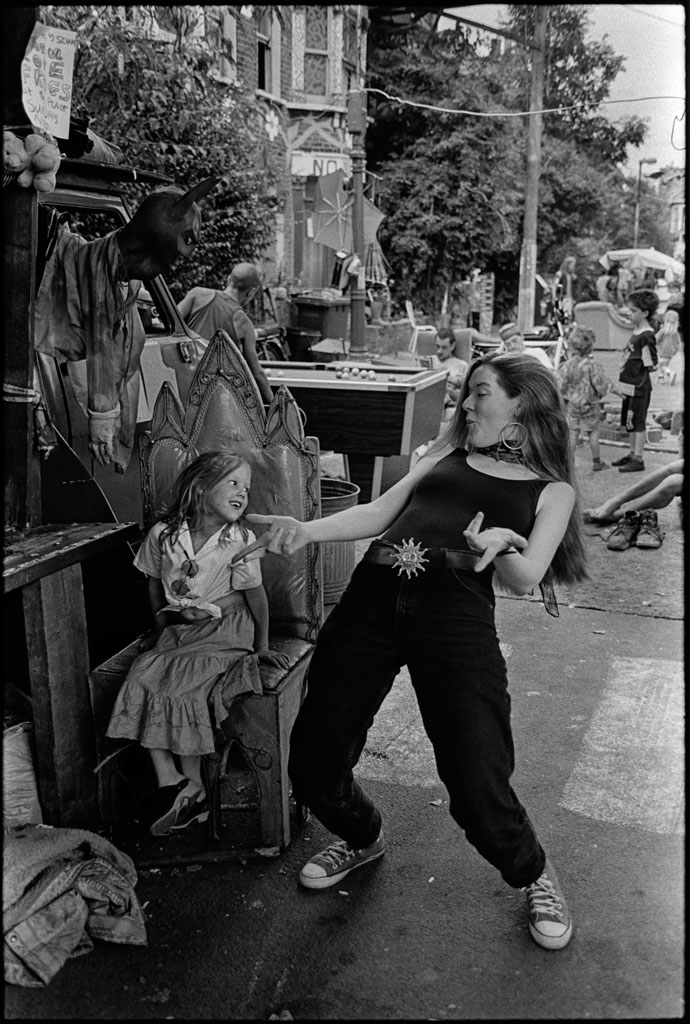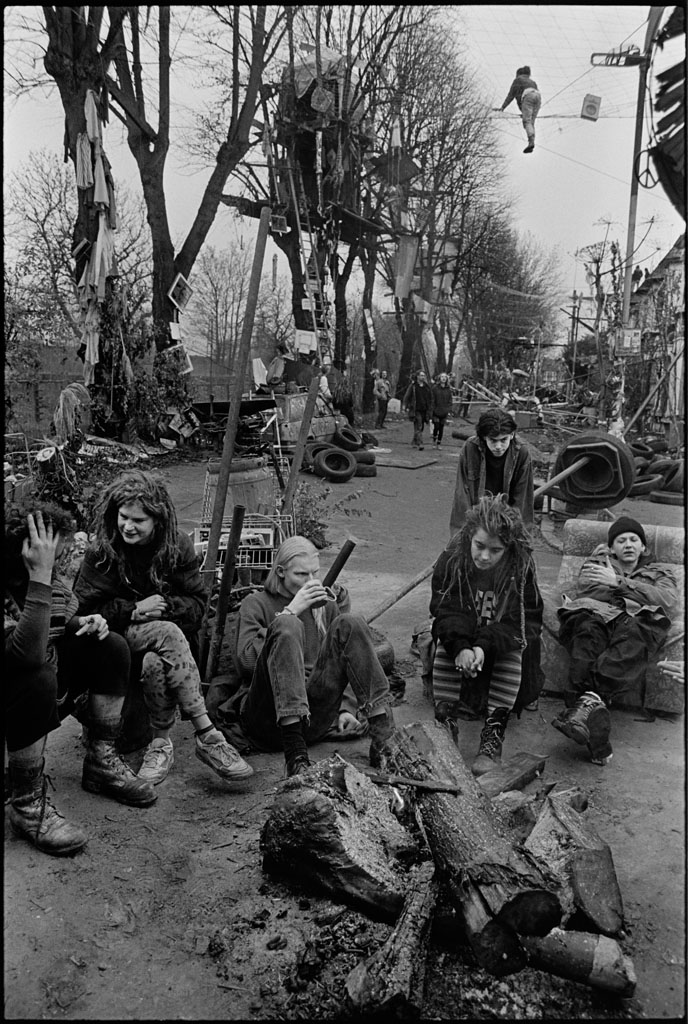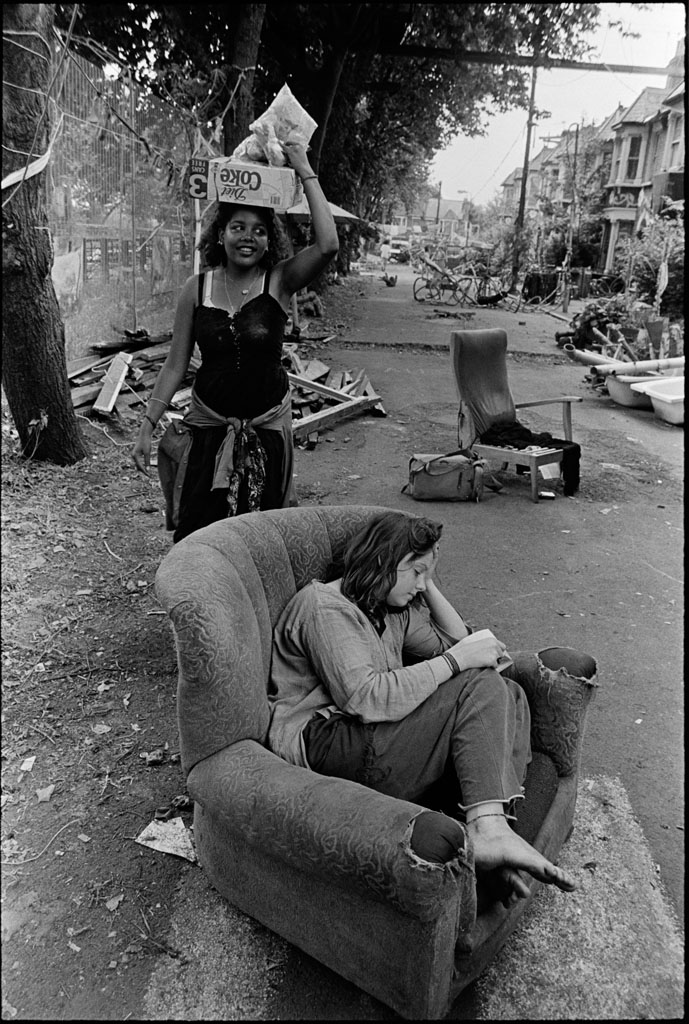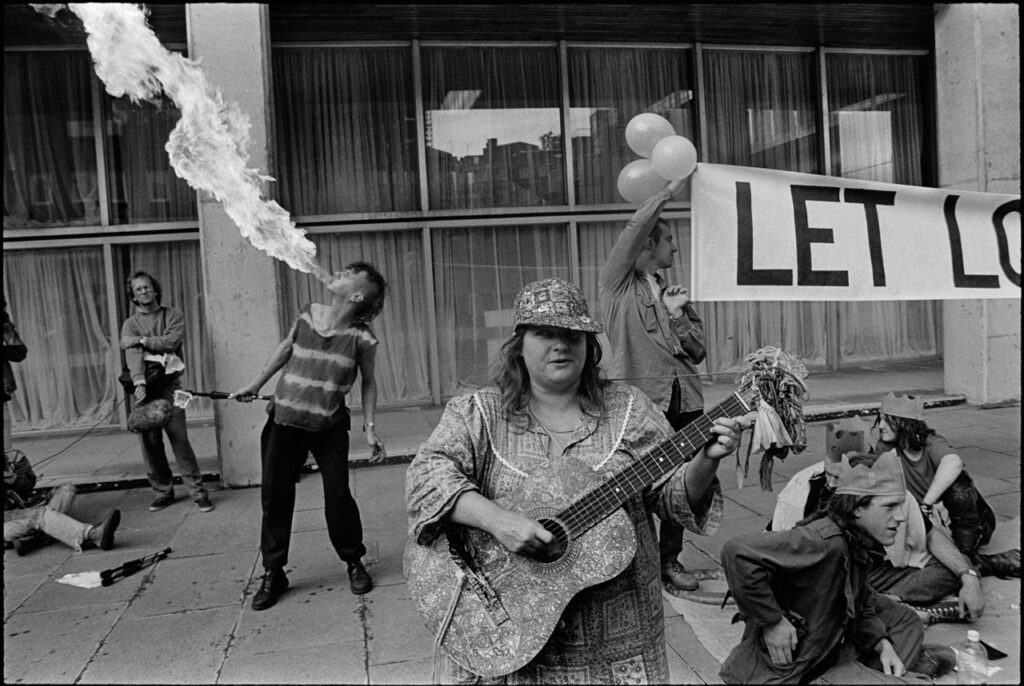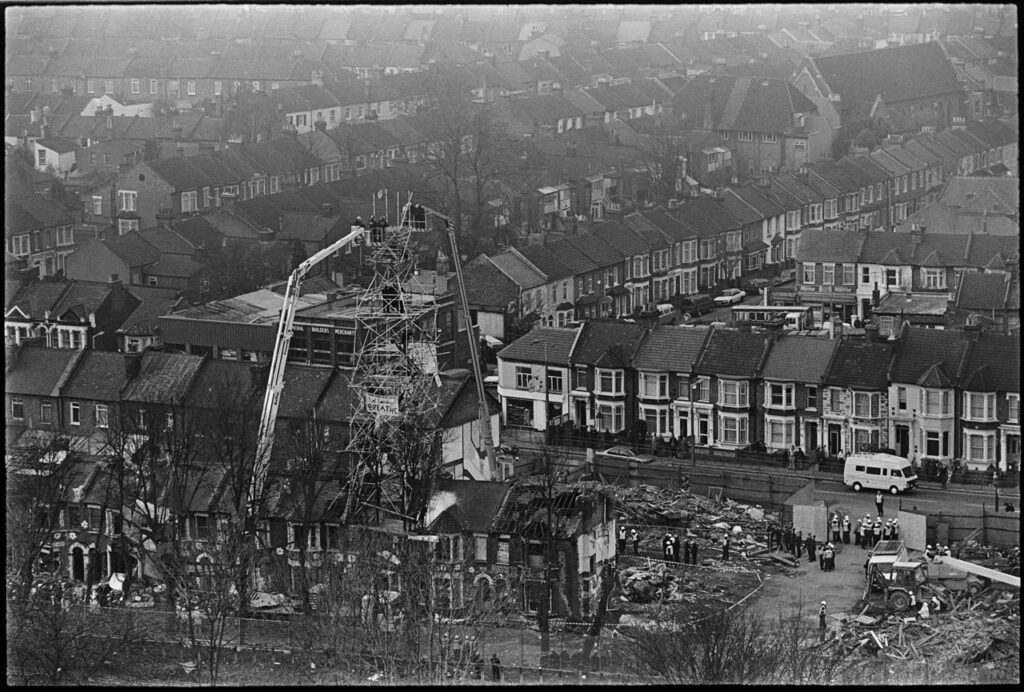
93 year old Dolly Watson loved number 92 Claremont road, she was born there and had lived their all her life. One day the government decided it wanted to build a link road to the London Orbital, it took 20 years for them to get to work but when they did her entire community was soon torn apart, given mandatory purchase orders and eviction. Soon, she was the only one to remain on the street.
She was soon joined by hundreds more, an autonomy was declared, and moments of beautiful freedom flooded out. Starting with the struggle to defend an ancient tree In 1993.
The state had declared its intention to cut down a 250-year-old chestnut tree in George Green in Wanstead. The community was outraged and following a local Lollipop Lady Jean Gosling efforts to rally local school children to stage interventions to raise awareness of the tree’s impending destruction. There was public outcry and many actions by protesters and conservation groups to save it took place.
The Battle of Claremont Road in 1994 formed part of a wider wave of anti-road protests in the UK during the late 20th century. These protests emerged in response to an expanding road-building programme, particularly schemes such as the M11 link road in East London. While often framed as environmental campaigns, they also involved broader conflicts over land use, urban space, and state authority.
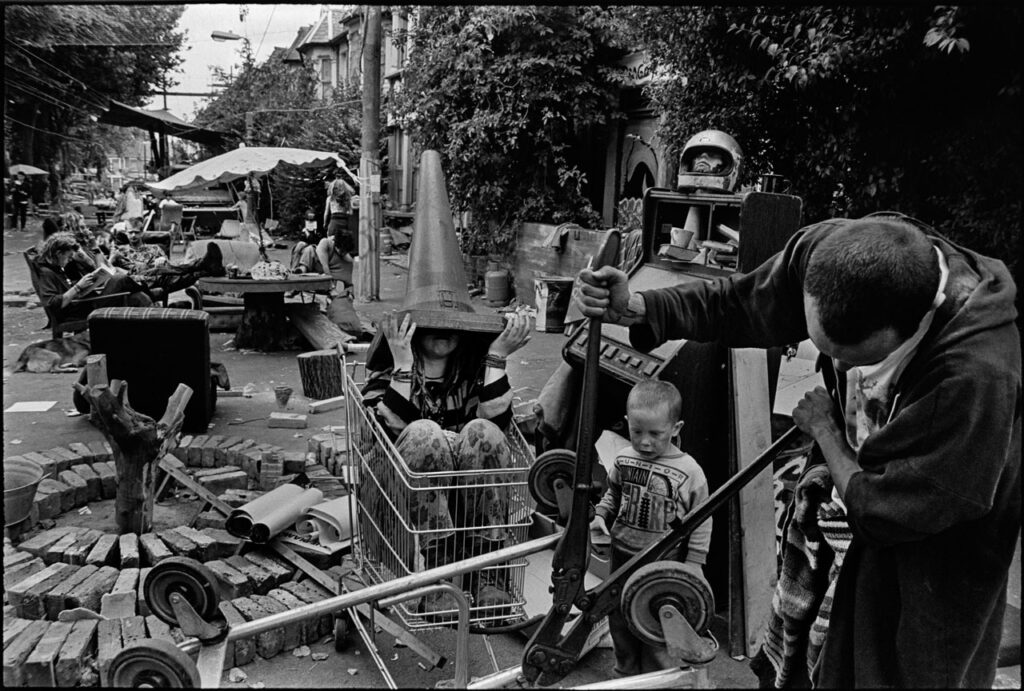
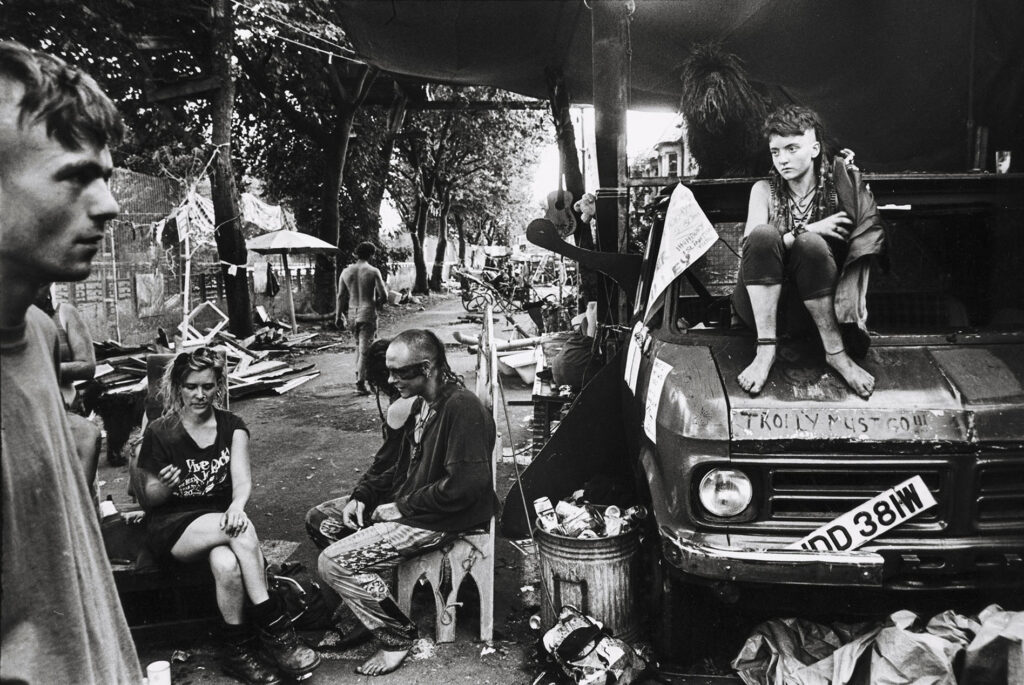
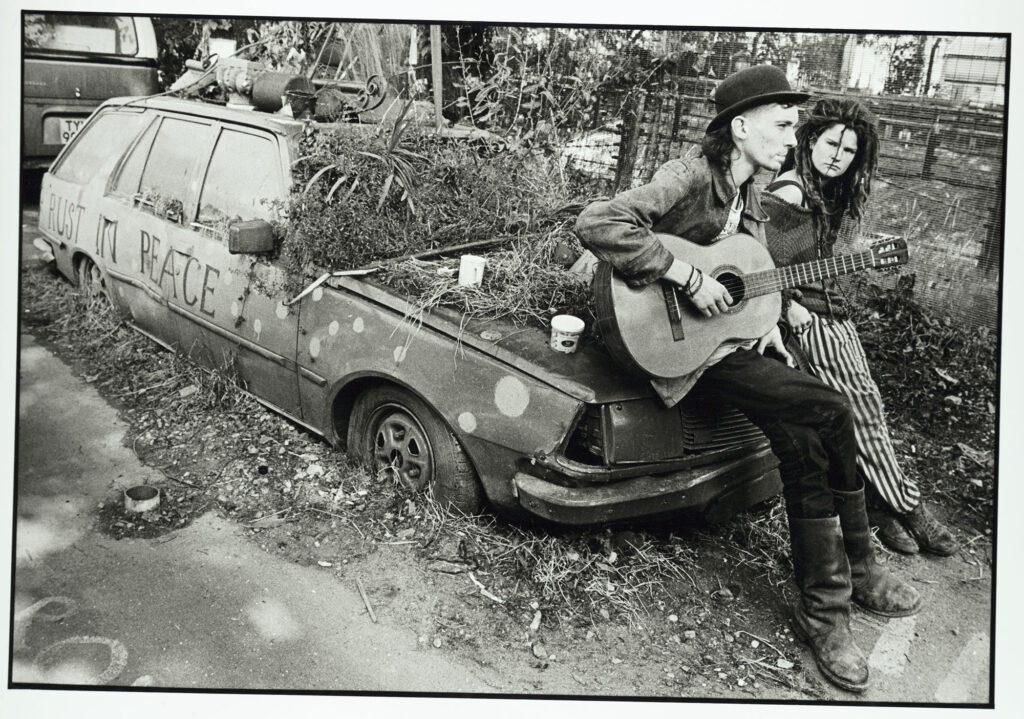
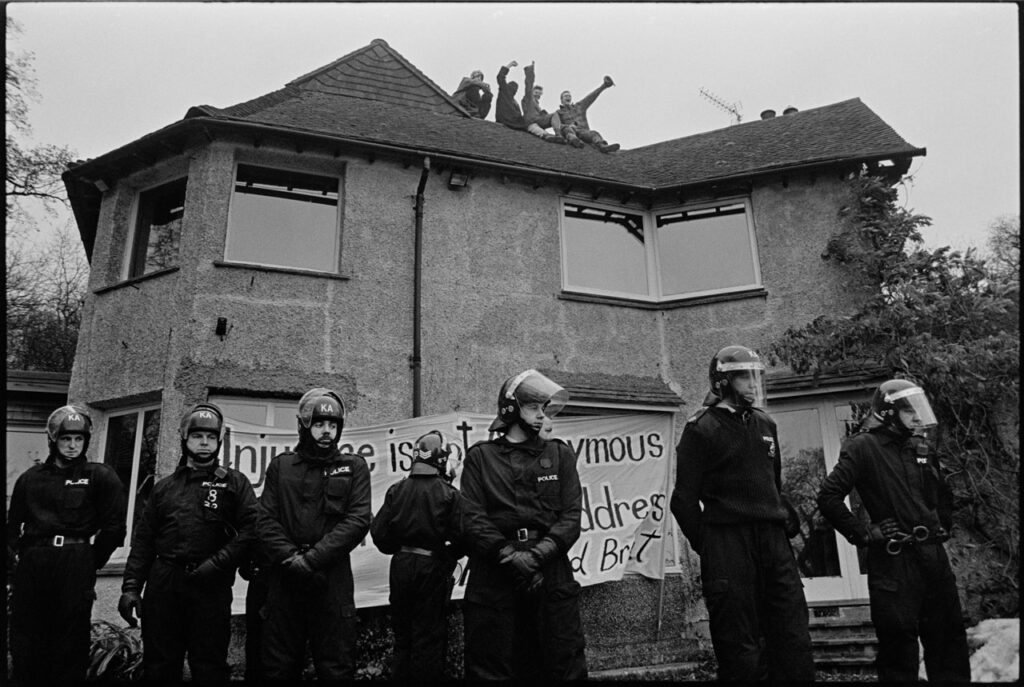
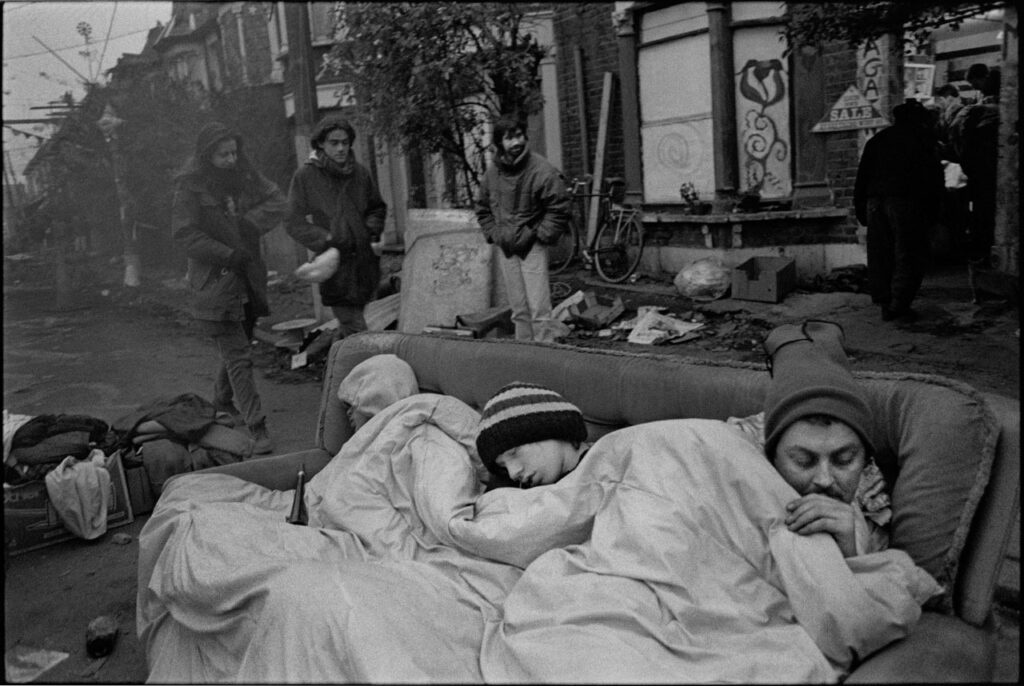
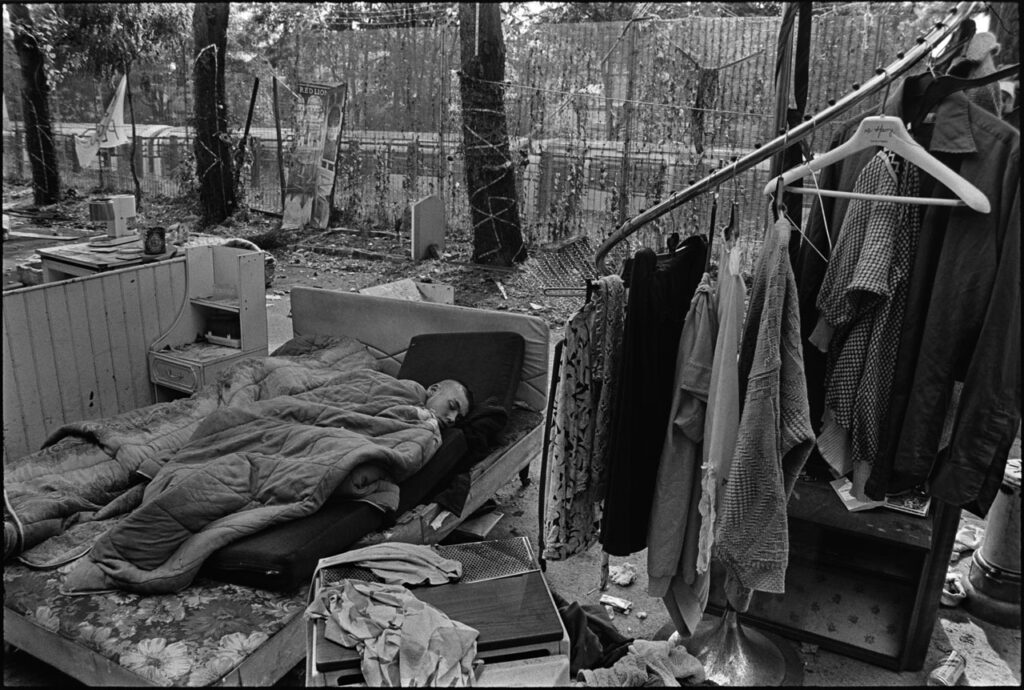
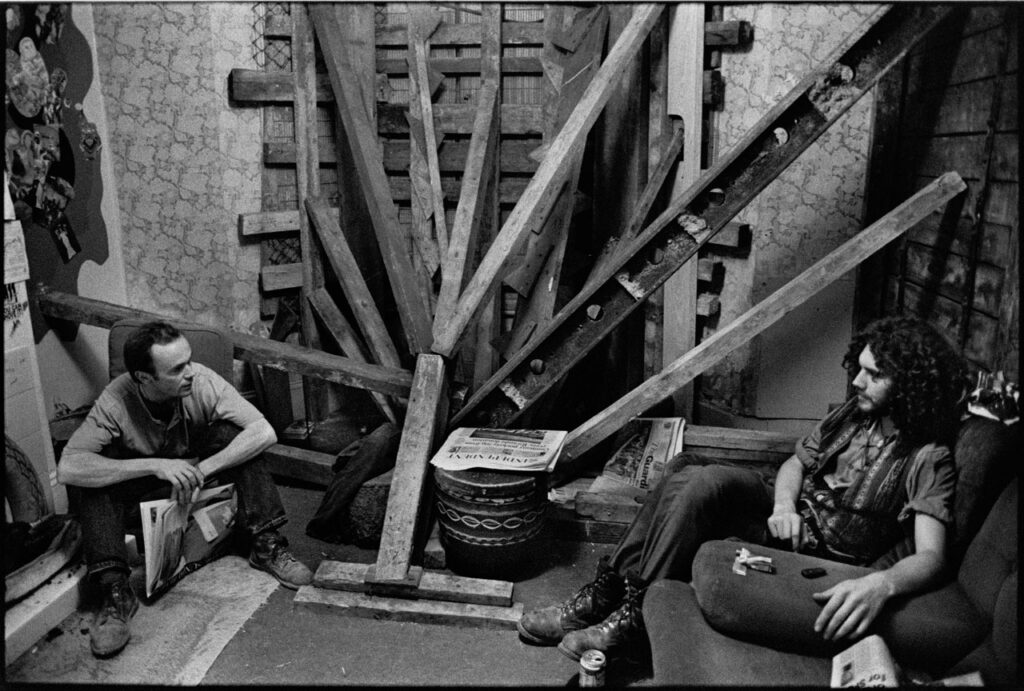
Claremont Road, Leyton, became a focal point of resistance. The street had been designated for demolition to make way for the road. Residents were gradually displaced through compulsory purchase orders, after which activists, squatters, and campaigners occupied the remaining houses. Over time, the occupation developed beyond a defensive effort to prevent eviction and demolition.
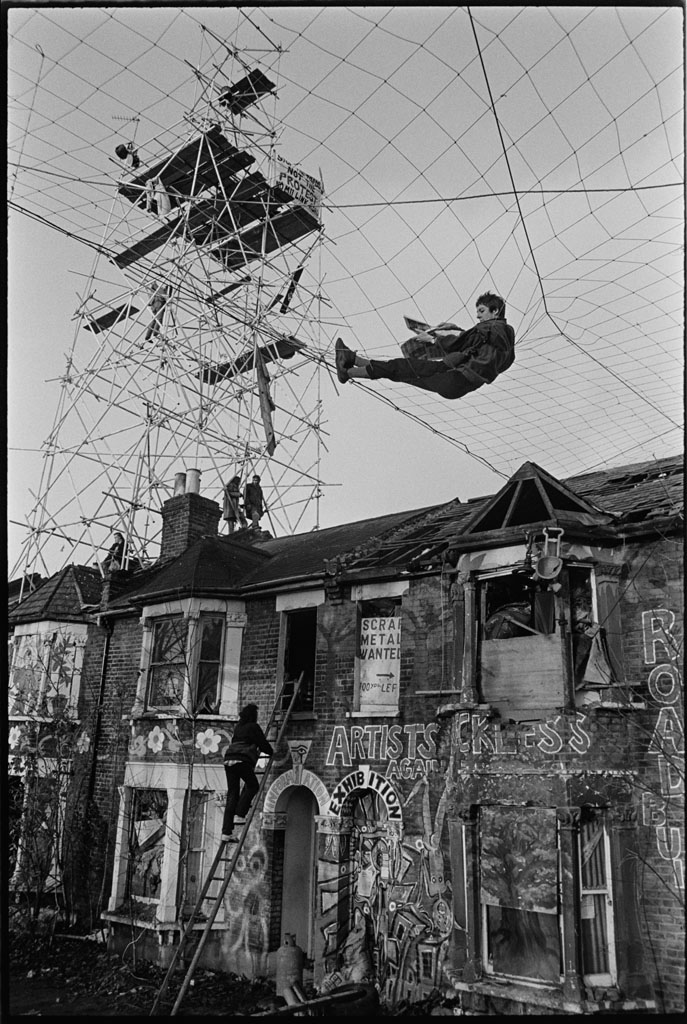
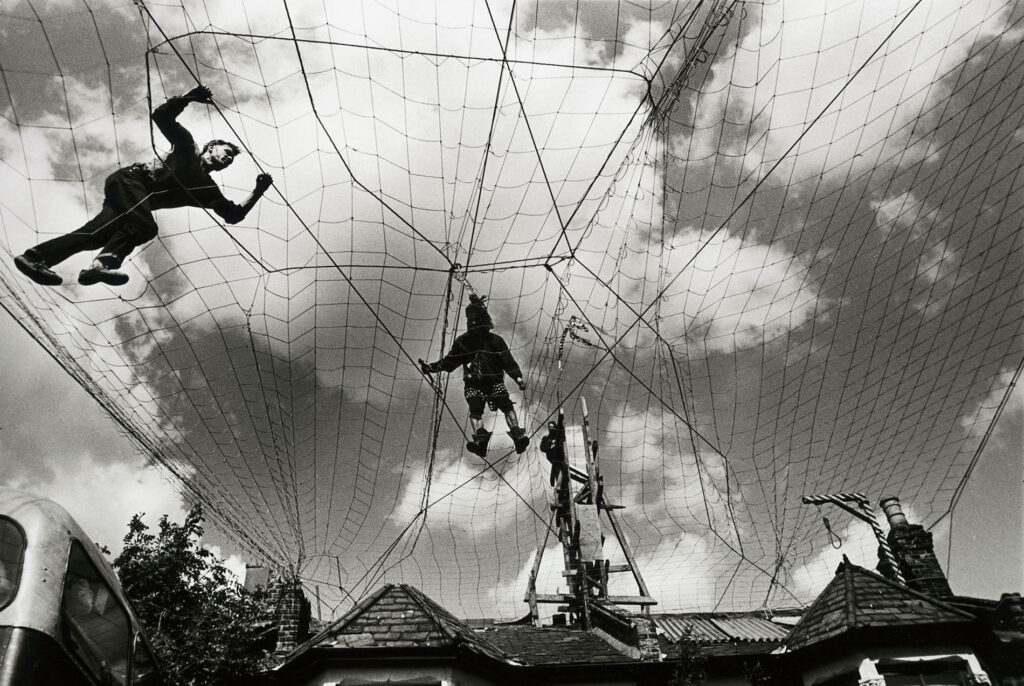
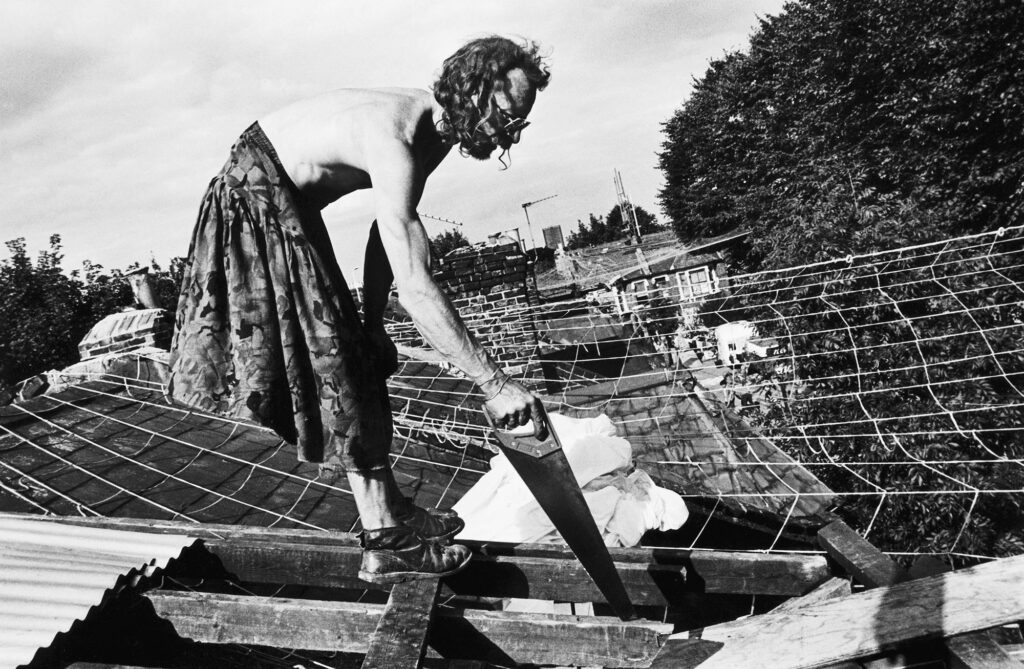
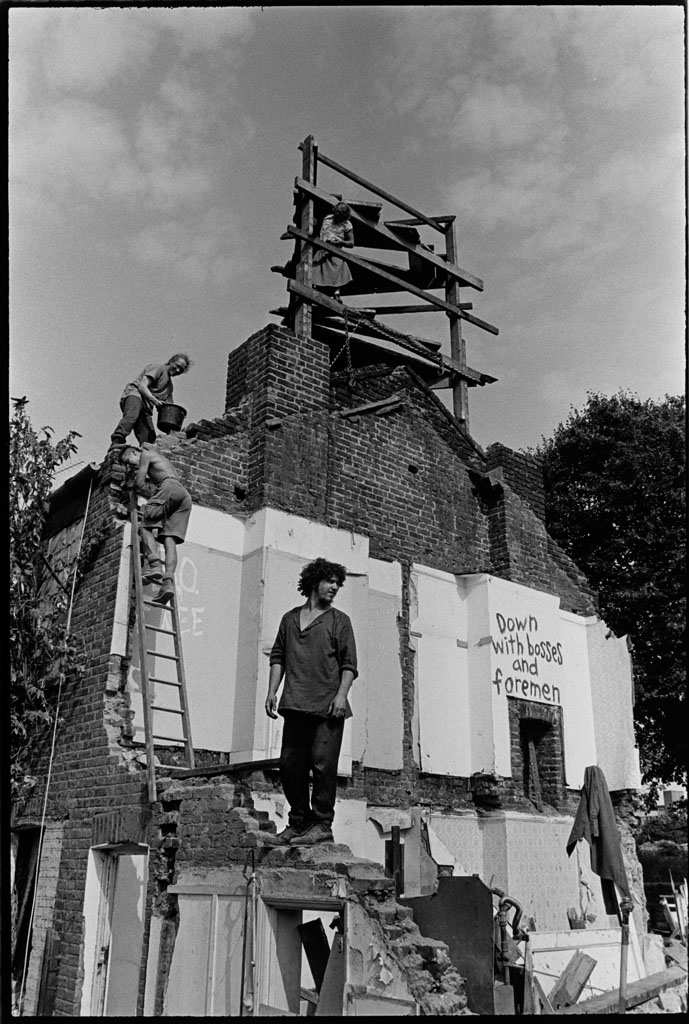
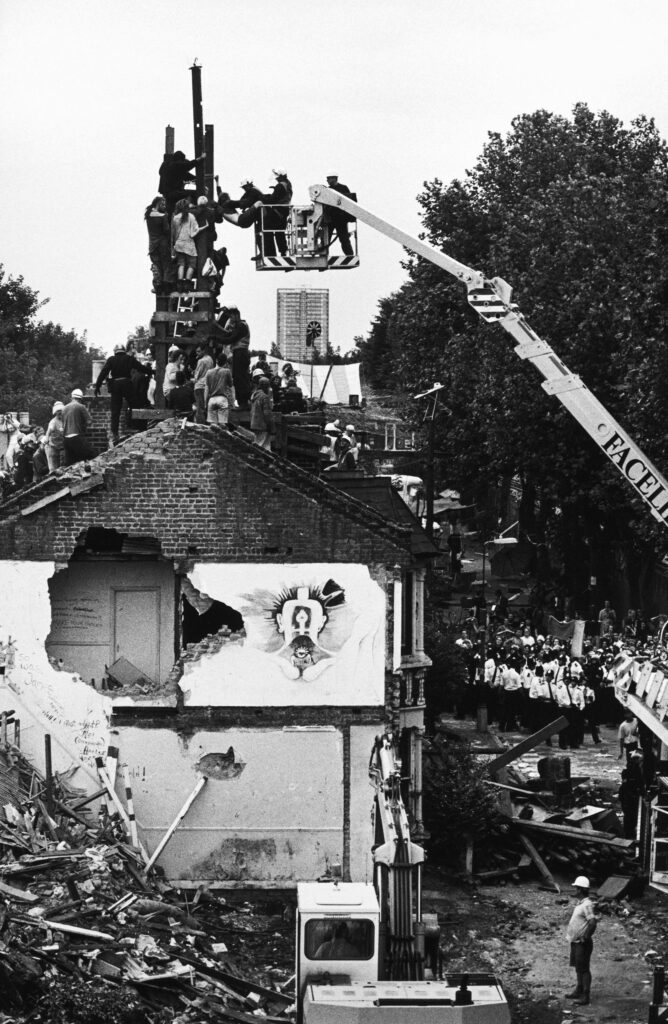
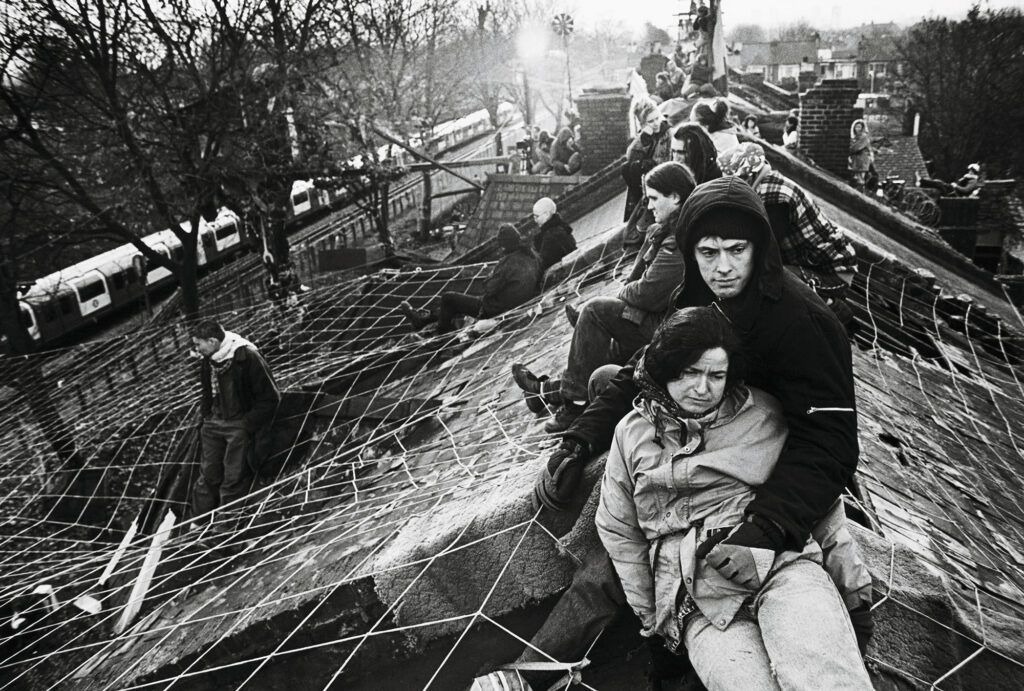
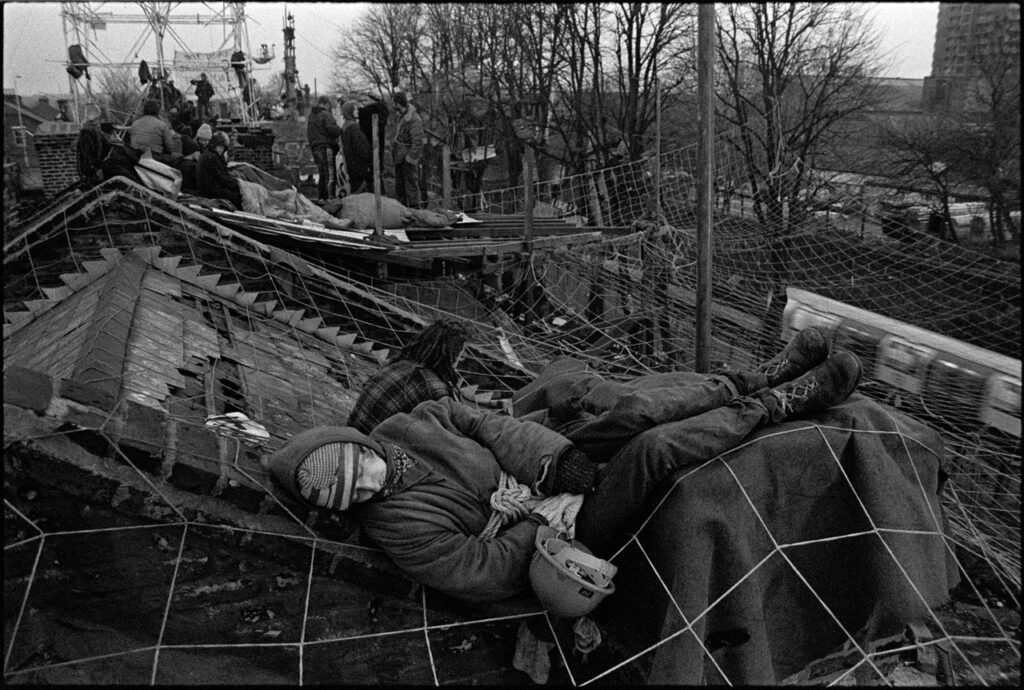
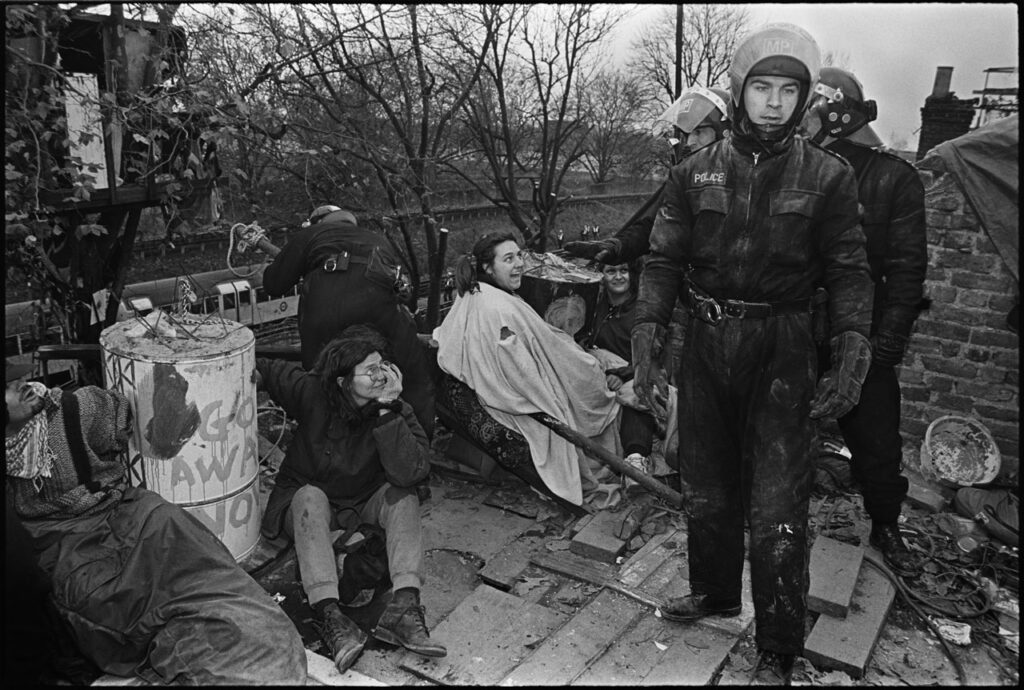
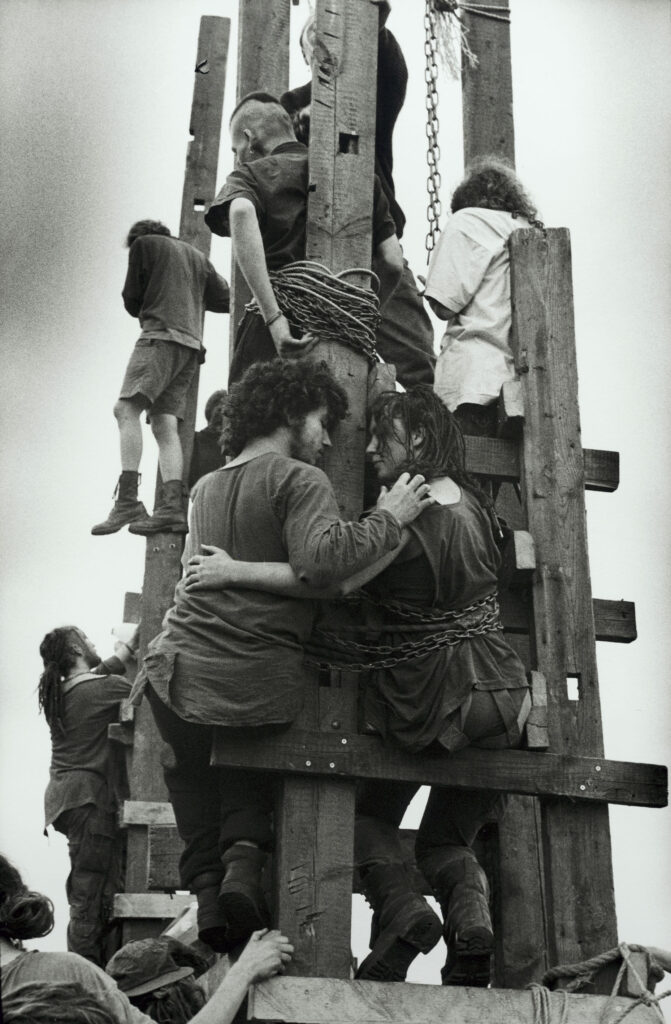
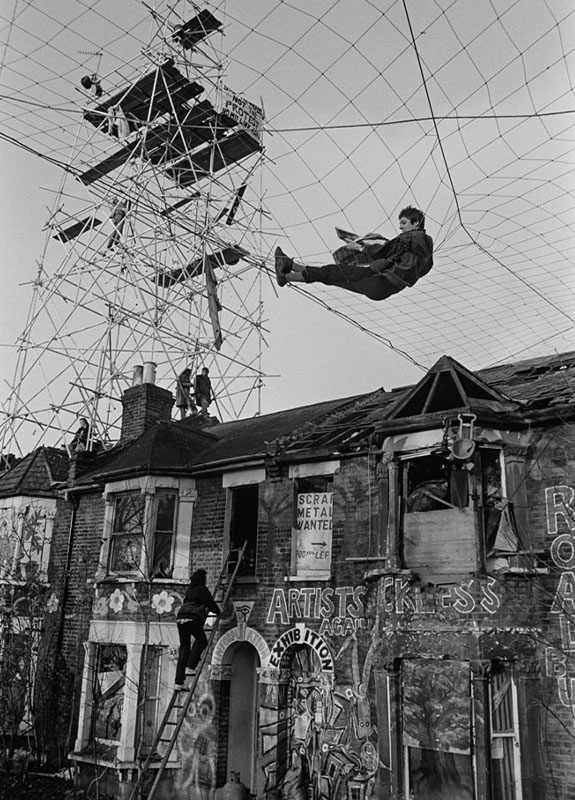
Bunkers, Treehouses, Barricades, walkways in the sky, lock ons and of course “Dolly’s Tower” which was built high above,
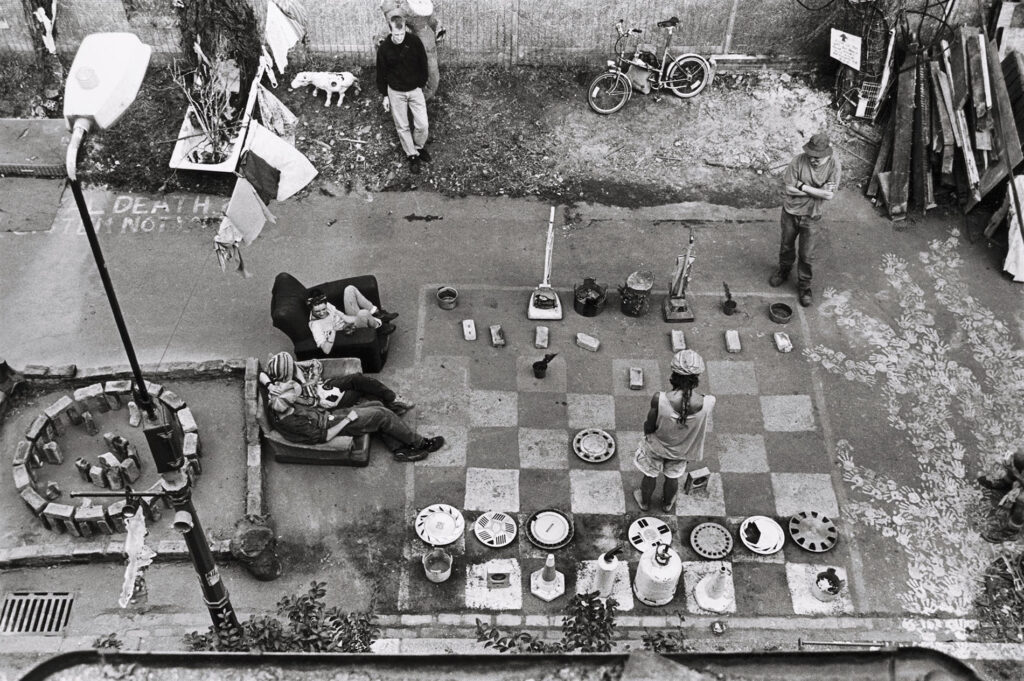
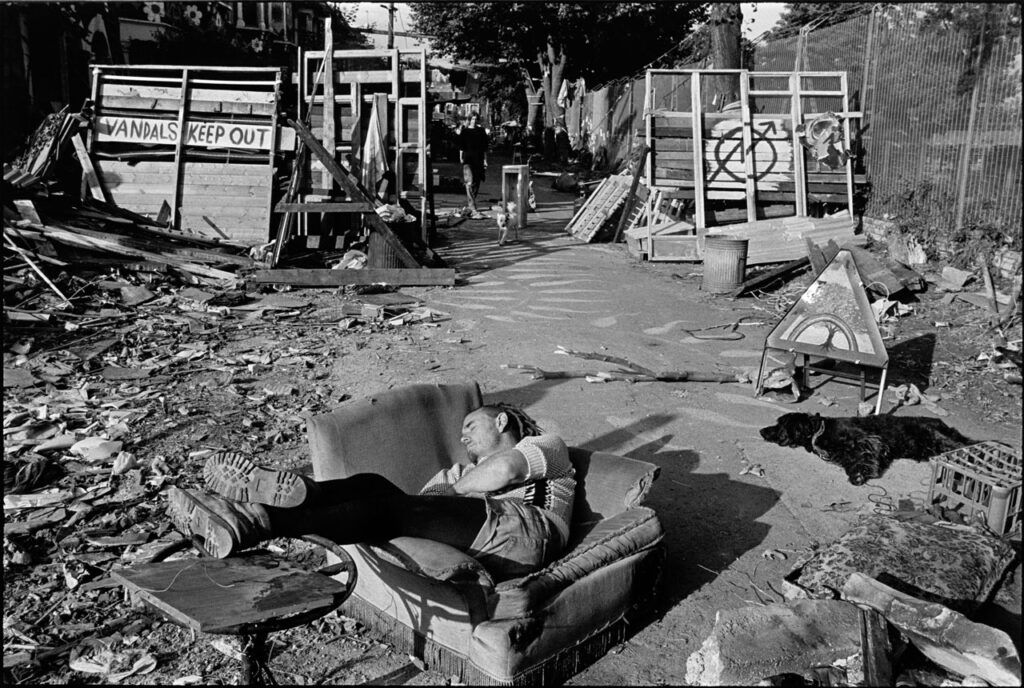
Participants altered the physical layout and use of the street. Houses were interconnected, structures were built on rooftops, and obstacles were placed along the road.
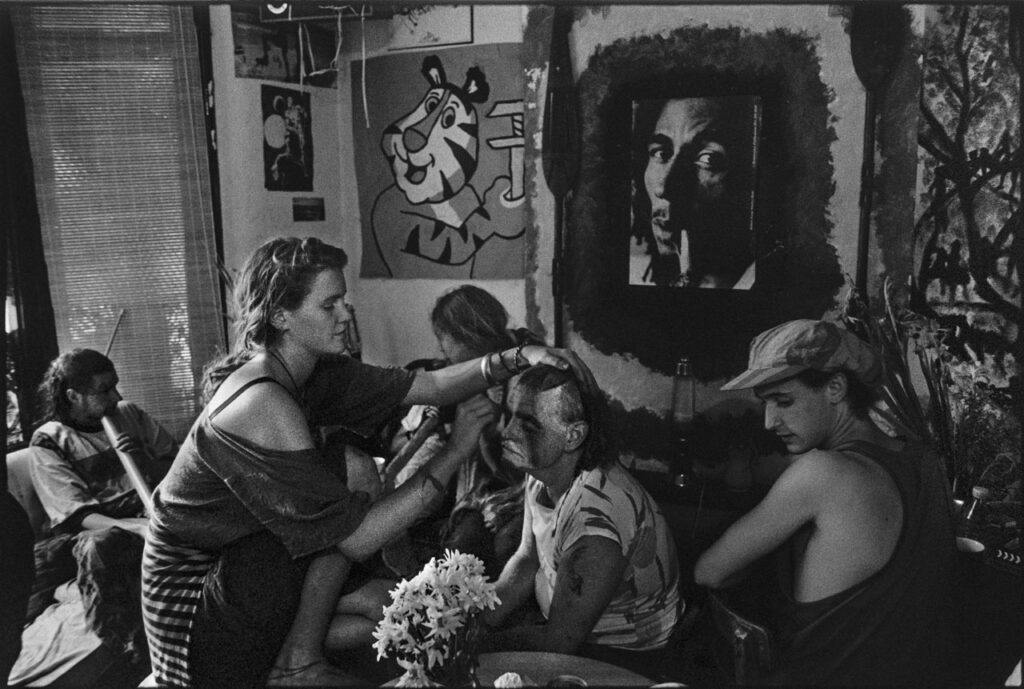
According to accounts archived on libcom, the street was effectively transformed into a continuous occupied space, challenging the intended function of the road as a transport route. The boundary between private and public space became less distinct, as both houses and the street itself were used collectively.
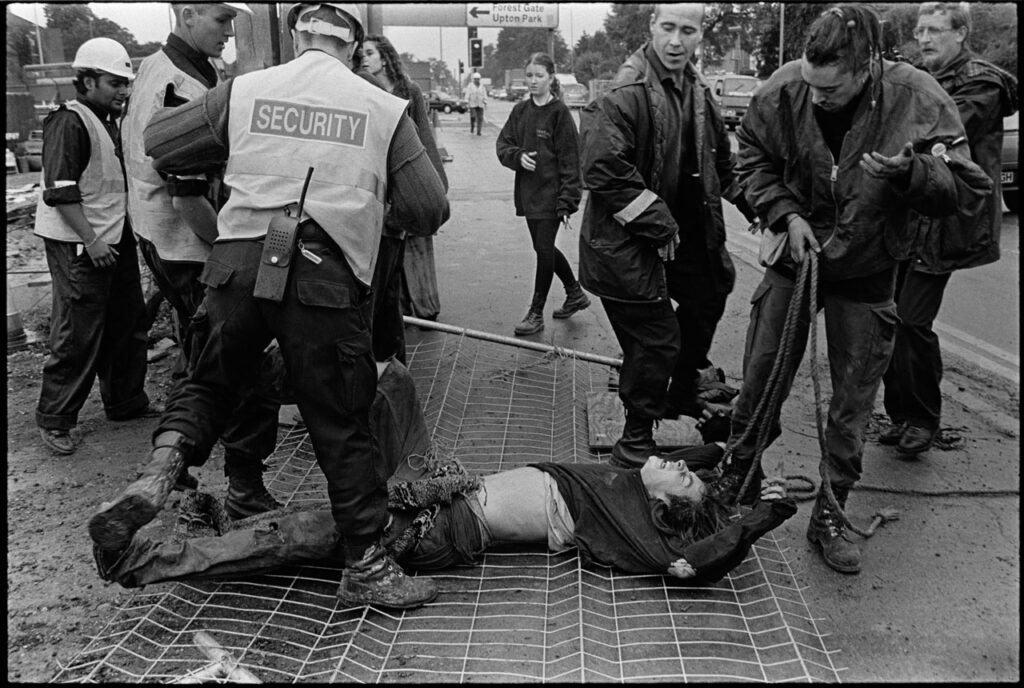
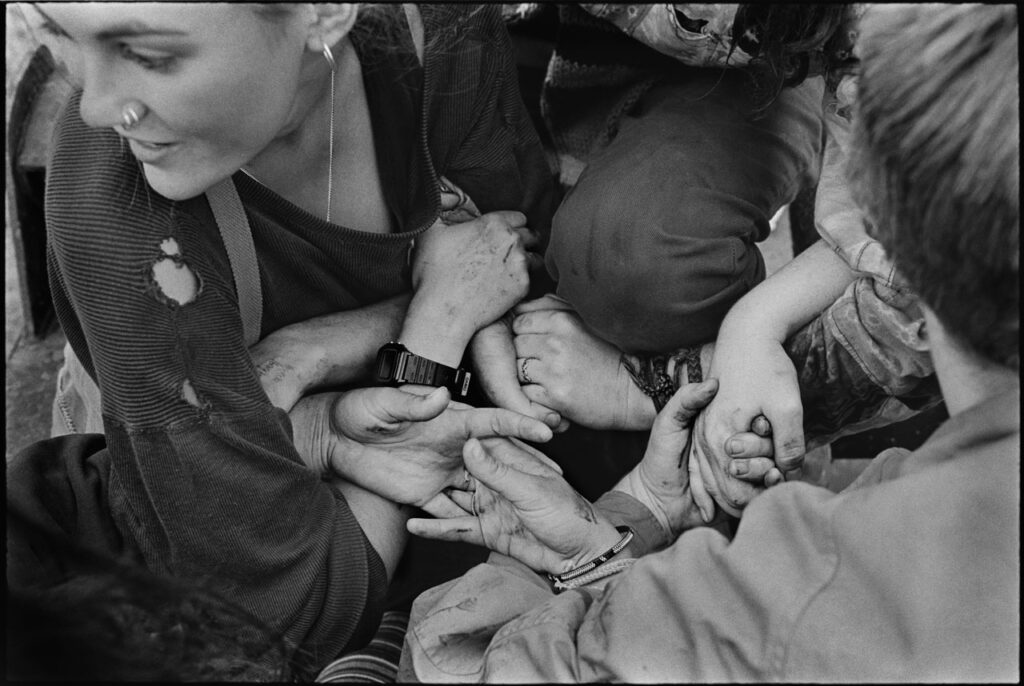
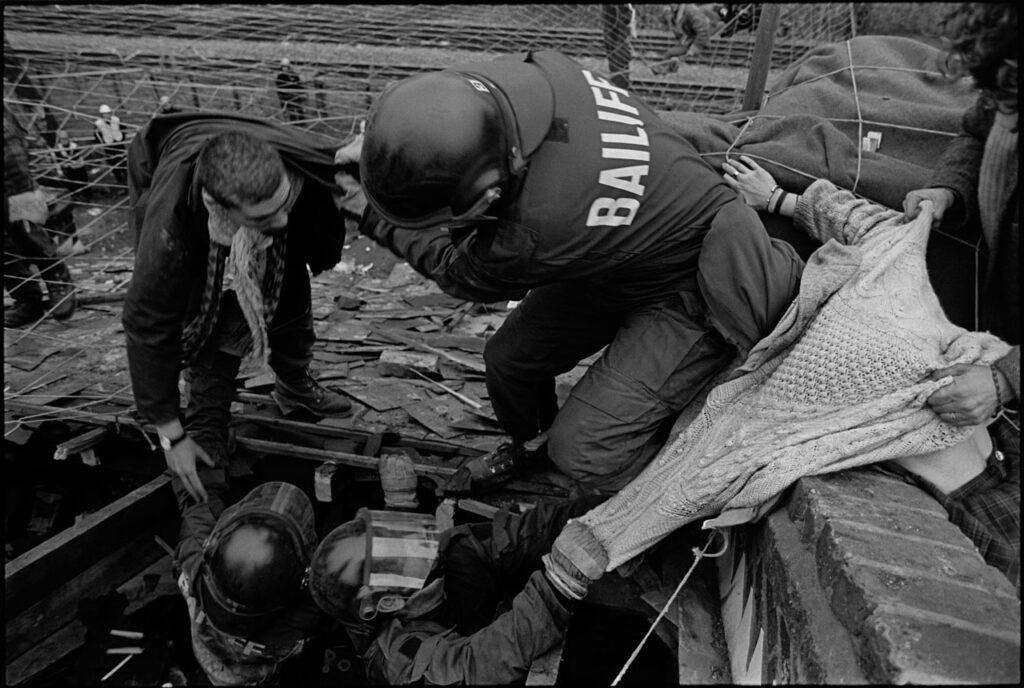
Tactics employed during the occupation included treehouses, scaffolding towers, tunnels, and lock-on devices designed to delay eviction. These methods were intended to increase the time and cost required for removal. The occupation was not centrally organised; rather, it consisted of a loose network of individuals and groups, including environmental activists, anarchists, travellers, and some former residents.
Within these movements, there were internal tensions. Accounts on libcom note differences between participants regarding commitment, organisation, and lifestyle. Some emphasised sustained resistance and political objectives, while others were more transient or focused on the social aspects of the occupation. These differences affected the cohesion and effectiveness of the campaigns.
On 27 November 1994, They held a massive party, knowing what would soon fall upon them.
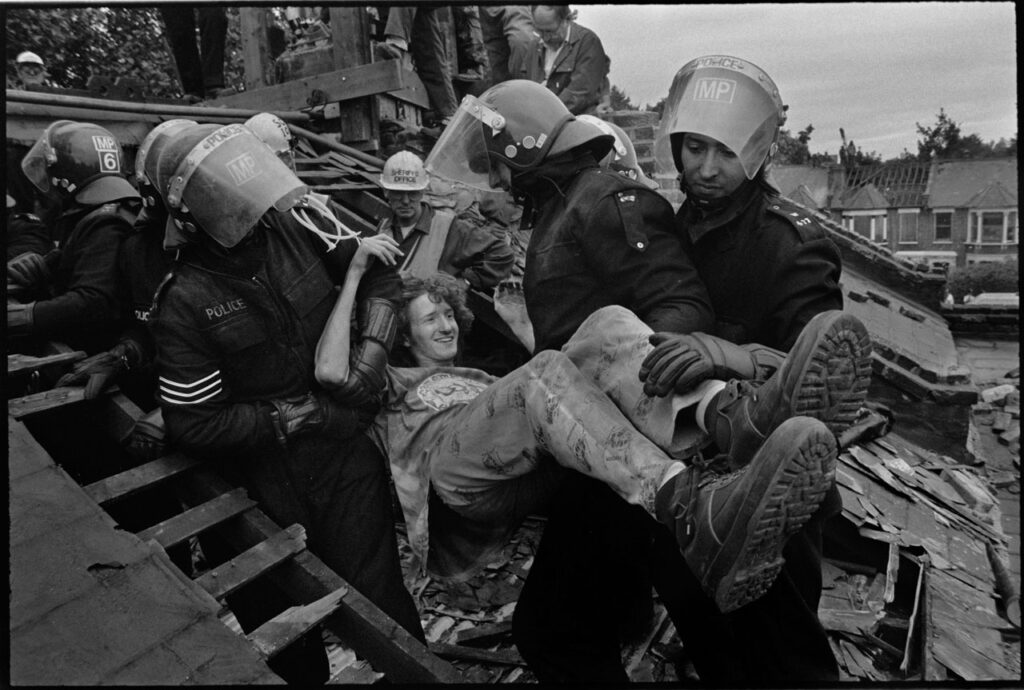
On 28 November 1994, the eviction of Claremont Road began.
Hundreds of cops and bailiffs rolled in. Dance anthems filling the air from a sound system in the tower. While the defenders were almost entirely committed passive resistors, the police held no such principle. As the hours ticked on, and the frustration kicked in, so did their penchant for violence.
You can find the details elsewhere, and it’s well worth reading up on the stories from those who were there, from the hilarious to the horrifying.
Dolly had fallen ill before the gestapo made their final pushes and cleared out the street, leaving her to rot in a old people flat, dying in February 2001, a few months shy of 100. She is forever remembered at the “Queen of the Street” by those who knew her.
The anti-road protests of this period were not limited to Claremont Road. Similar actions took place at sites such as Twyford Down and Newbury. For many the active resistance continued on through into June 1995 at “Munstonia” on Fillebrook Road and then ultimately the birth of the Reclaim The Streets movement, which took to occupying streets, holding raves, before disappearing into the night.
Remember these moments, read more about them, learn the lessons, and make more happen, no one else is going to rescue you, get to causing trouble.
Casper
Many thanks to Gideon Mendel for sharing these wonderful photographs with us. You can find these and many more on their website: gideonmendel.com.