During
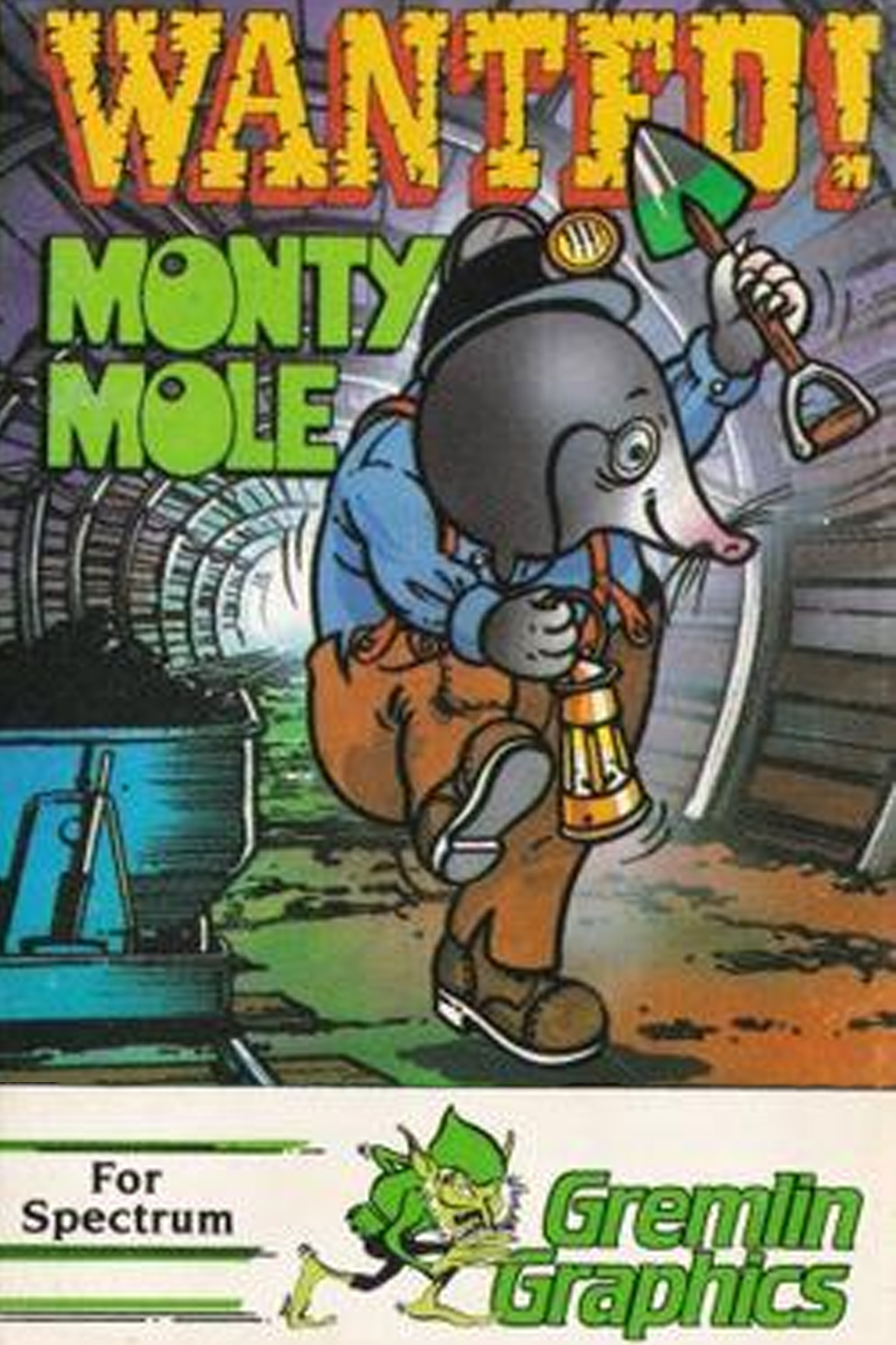
the height of the 1984-85 UK Miner’s Strike, Wanted:
Monty Mole
for
the ZX Spectrum was released, in which the titular character; a
strike-breaking miner collects coal from a South Yorkshire coal mine
in order to support his family during the strike. The antagonist,
Arthur Scargil (leader of the National Union of Mineworkers) is
defeated by venturing into ‘Arthur’s Castle’ and collecting
ballot papers while dodging flying pickets and cans of Scargil’s
signature hair spray.
The
game was written by the 19 year old son of a mine training officer,
Peter Harrap through the British software house Gremlin Graphics.
Founders Ian Stewart and Kevin Norbun thought that the miner’s
strike would be a good hook for the game, so built it around the
strikes motifs like Scargil himself, as well as the concept that the
miners get screwed over no matter what, as once Monty defeats
Scargil, he gets arrested by Thatcher’s militaristic police force
(presumably sent by Scargil who owns the mine?) and gets sentenced to
5 years in prison. It all resulted in an incredibly convoluted story,
that evidently treats Thatcher’s almost state of emergency regime
as though it was a moral equivalent to Scargil’s Miners Strike.
The
concept of collecting ballot papers and a vote casting scroll to
topple Scargill is a reference to the reactionary line at the time
that the Miners strike was illegal because it happened without a
national ballot being held. In a similar vein, the flying cans of
hair spray refers to the famous Daily Mirror photograph of hair spray
in Scargill’s briefcase contents. This incident was used by the
British media as Scargill’s tan suit moment, in which Etonian op-ed
writers tried to emasculate him by pointing out supposed vanity.
As
a result of this controversial subject choice, eight radio stations,
national newspapers, and national television news reported on the
game, including ITV’s News at 10 Program, and the BBC. The media
wanted to cash in on any vague semblance of the miner’s strike
controversy that could enrage enough viewers into tuning in.
The
software house, which was located in Sheffield and not that far from
the South Yorkshire coal mines, profited hugely from the exposure of
their new game. Gremlin Graphics subsequently tried to alleviate
political adversity by publicly promising to donate 5 pence per copy
sold to the Miner’s Welfare Fund. The fund ultimately denied the
donation without a comment.
When
asked why they chose to villainize Scargill in a 2011 Metro
interview, Ian Stewart described the decision as “unashamedly
a PR stunt. It was opportunistic.”
and
“I’m
not a political person. I’d rather it be remembered because it was
good a stunt.“ It
wasn’t too different from the logic of the media coverage, and
ultimately devoid of much political gravitas beyond ‘Now is the
advent of neoliberalism. Let’s see how profitable it would be to
devour and sanitize an event in which 142,000 miners are fighting for
their jobs.’
Wanted:
Monty Mole earned the accolade ‘best platform game’ in the then
prolific Crash magazine, and spawned six successful sequels, and
ultimately became the unofficial mascot of the ZX Spectrum.
“In
my view Monty Mole will be a future Spectrum hero and there will be
posters of him adorning every wall in Britain. After hearing about
this game on the News, I thought it would be a winner, and when it
arrived I found I was right.” – Crash! (October 1984)
The
strike ultimately fell into a trap set by Thatcher’s government,
who anticipated it and who had organized large amounts coal stocks to
be stored near power plants resulting in the strike’s failure and
subsequent symbolic death of the British labor movement. This was
just a few years after Raegan fired 11,345 striking air traffic
controllers, and taught America’s ruling class that they could
exploit their workers in favor of ‘competitive work practices’
and fire whoever disagreed.
In retrospect, the bizarre concept of demonizing Arthur Scargill as a machiavellian plutocrat who oppresses a monocle-bearing scab mole doesn’t really add up to much. It’s a goofy take on what equated to pop culture in 1984. Devoid of any real meaning, or even harm, and mostly just a useful example against the ‘get politics out of video game’ debate, Wanted: Monty Mole is an obscure and confusing relic of the miner’s strike. ■
Jesse Dekel is an organiser based in Montreal. She is particularly interested in video games, trans issues, homelessness, and sex work.
The following is a transcript of the talk given by members of Houston’s own Space City Anarchist Organisation (SCAO) at last years Amsterdam Anarchist Bookfair. A Brief HistoryIn the United States, 2022 was dubbed the year where an “epidemic of violence” soared across the United States in response to the normalization of hate against the […]
SDF Prisoners in STG HandsIn the last months during various attacks and skirmishes, the STG has taken an unknown number of SDF POW. While prisoner’s release is supposed to be a part of the integration agreements, little headway has been made on the issue. In Qamishlo families have been protesting this, demanding information about their […]
Al-Hol Emptying OutLast week we reported on the exodus from the ISIS foreigners section of the al-Hol camp to the point of being nearly empty. Now it seems the camp as a whole, including the Iraqi and Syrian section are emptying since security at the camp has collapsed since the takeover of STG. There is […]
The following is a statement from Houston’s Screwston Antifascist Committee. You can find more information about their work and resources various on their website. screwstonafc.noblogs.org Our organization is being targeted by Texas Attorney General Ken Paxton who, on Friday, February 6th, released a public statement calling us “deranged traitors” and terrorists, citing Trump’s prior executive order […]
DAANES and STG at Munich Security ConferenceHighest DAANES co-representative Ilham Ehmed and SDF highest co-command Mazloum Abdi participate in the 62th Munich Security Conference, a reknown conference of high-ranking actors of the fields of politics, diplomacy, and security. STG foreign minister al-Shabani too is taking part. Locally, people protest the STG participation and legitimisation through […]